



Written by Rick Kovac, COO of Golden Lighting
The takeaway: A kitchen that looks finished but feels wrong almost always has a lighting problem, not a decor problem — the fix is layering ambient, task, and accent light instead of asking one ceiling fixture to do every job.
Key takeaways:
- Kitchens need three lighting layers — ambient, task, and accent — each doing a different job, not one central fixture trying to do all three.
- Task lighting belongs in front of the person working, not overhead, or the body casts a shadow across the exact surface that needs light.
- Keep color temperature coordinated across layers: warmer tones (roughly 2700K–3500K) for ambient and accent light, and a crisper 4000K or higher where real work happens, like under cabinets and over the range.
- Separate switching and dimming for each layer lets the kitchen shift from cooking to cleaning to entertaining without a full lighting overhaul.
A kitchen can look finished and still feel wrong. The countertops are polished, the cabinetry is carefully chosen, and the pendant above the island looks striking in photographs, yet chopping vegetables leaves hands in shadow and evening conversations feel flat. The problem usually isn't a shortage of attractive fixtures. It's a lighting plan that treats the ceiling as the whole solution.
The most reliable kitchen lighting ideas start with how the room is used. Cooking, cleaning, entertaining, working, and moving through the space at night each need a different level and direction of illumination. A functional system combines ambient, task, and accent layers, then controls glare, color temperature, and switching so the kitchen can change with the day.
Why Most Kitchens Feel Dark and How to Fix It
A single central fixture often creates the same frustrating scene: the room is technically lit, but the countertop remains difficult to use. Light falls from behind the person preparing food, so the body blocks the beam and produces shadows exactly where a knife, recipe, or cutting board needs clarity.
This mistake appears frequently in renovations that select decorative fixtures before mapping the work zones. A large chandelier or central flush mount may brighten the floor, but it won't automatically illuminate the sink, range, pantry entrance, or countertop edge. The kitchen then feels visually cramped because bright and dark areas compete instead of connecting.
Natural light helps, but it works best when window placement and electric lighting are planned together from the start — daylight access and fixture layout should reinforce each other rather than compete.
The three-layer correction
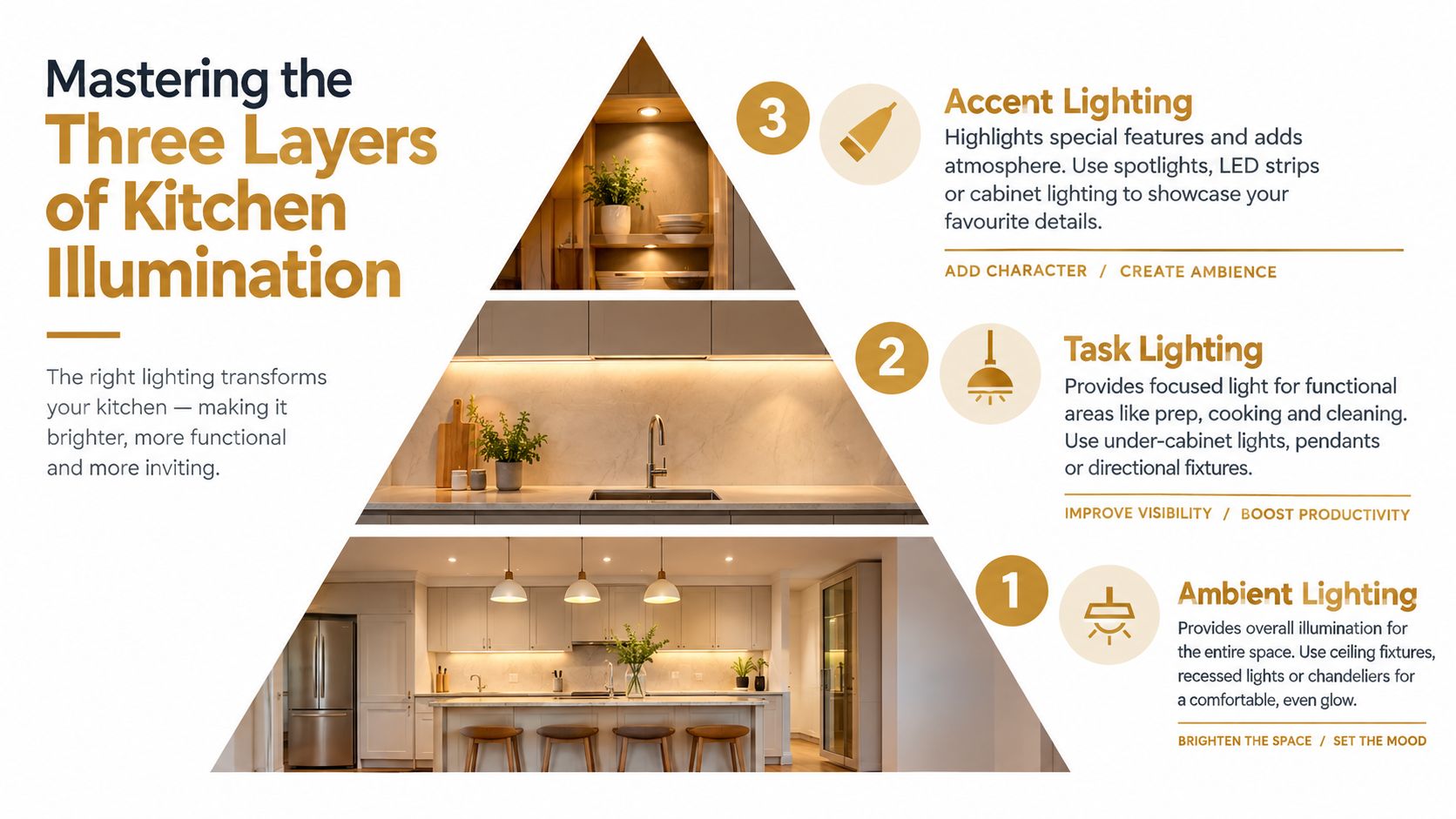
Ambient lighting establishes a safe, comfortable baseline for circulation. Recessed downlights, a semi-flush fixture, or carefully distributed ceiling fixtures can support movement without forcing every surface to carry the full burden of illumination.
Task lighting belongs where work happens. Under-cabinet linear lights, a lit range hood, and appropriately aimed downlights place illumination in front of the user, reducing the shadows that overhead-only layouts create.
Accent lighting adds depth and directs attention. Interior cabinet lights, a softly illuminated backsplash, toe-kick lighting, sconces, or a decorative pendant can separate the kitchen from the feel of a utility room.
Professional rule: A decorative fixture should finish the lighting composition, not compensate for missing task light.
Homeowner research backs up this function-first approach. According to National Kitchen & Bath Association data, in 2026 95% of homeowners considered natural lighting important, while 93% prioritized quality lighting and 92% prioritized task lighting for work zones. Layered, purposeful lighting isn't a design luxury — it's what most homeowners now expect from a kitchen.
Mastering the Three Layers of Kitchen Illumination
A professional plan begins by assigning each layer a job, then setting a suitable brightness target for that job. Ambient light supports safe movement, task light improves visual accuracy, and accent light creates hierarchy without carrying the entire functional load.
Start with ambient coverage
General kitchen illumination is commonly planned around 30 to 40 foot-candles as a baseline for circulation and broad visibility. This doesn't mean every ceiling point must reach the same reading. It means the room shouldn't contain distracting pockets of darkness between the entrance, island, cabinets, and adjacent living areas.
Use the ceiling plan to identify walking routes and transitions. A narrow-beam downlight can support a particular zone, while a wider distribution may work better for an open area. The fixture count should follow the room's geometry and finishes, not a rigid grid that places light in empty floor space.
Raise the standard over work surfaces
Countertops and food-preparation areas need a stronger target — commonly 50 to 75 foot-candles for detailed prep work, according to interior lighting design guidance. Task fixtures should be positioned so the beam reaches the counter in front of the person using it.
Under-cabinet lighting works particularly well because it moves the source forward. A recessed fixture centered in the ceiling may illuminate the user's shoulders and cast a shadow across the worktop, while a front-positioned linear fixture can project light onto the active surface.
A simple planning sequence keeps the design practical:
- Map the work zones. Mark the sink, range, primary prep area, coffee station, pantry access, and island seating.
- Assign ambient coverage. Use ceiling fixtures for walking routes and general visibility.
- Add task sources. Place linear under-cabinet lighting, range-hood illumination, or focused downlights at the work surface.
- Reserve accent sources for hierarchy. Use cabinet interiors, sconces, or decorative fixtures to shape the evening atmosphere.
- Put each layer on separate controls. A kitchen that can dim or switch zones independently is easier to use than one controlled by a single wall switch.
The Golden Lighting guide to layered illumination provides a useful planning reference for coordinating these zones. A complete plan doesn't merely add more fixtures. It directs the right kind of light to the right activity.
Solving the Glare Problem on Glossy Surfaces
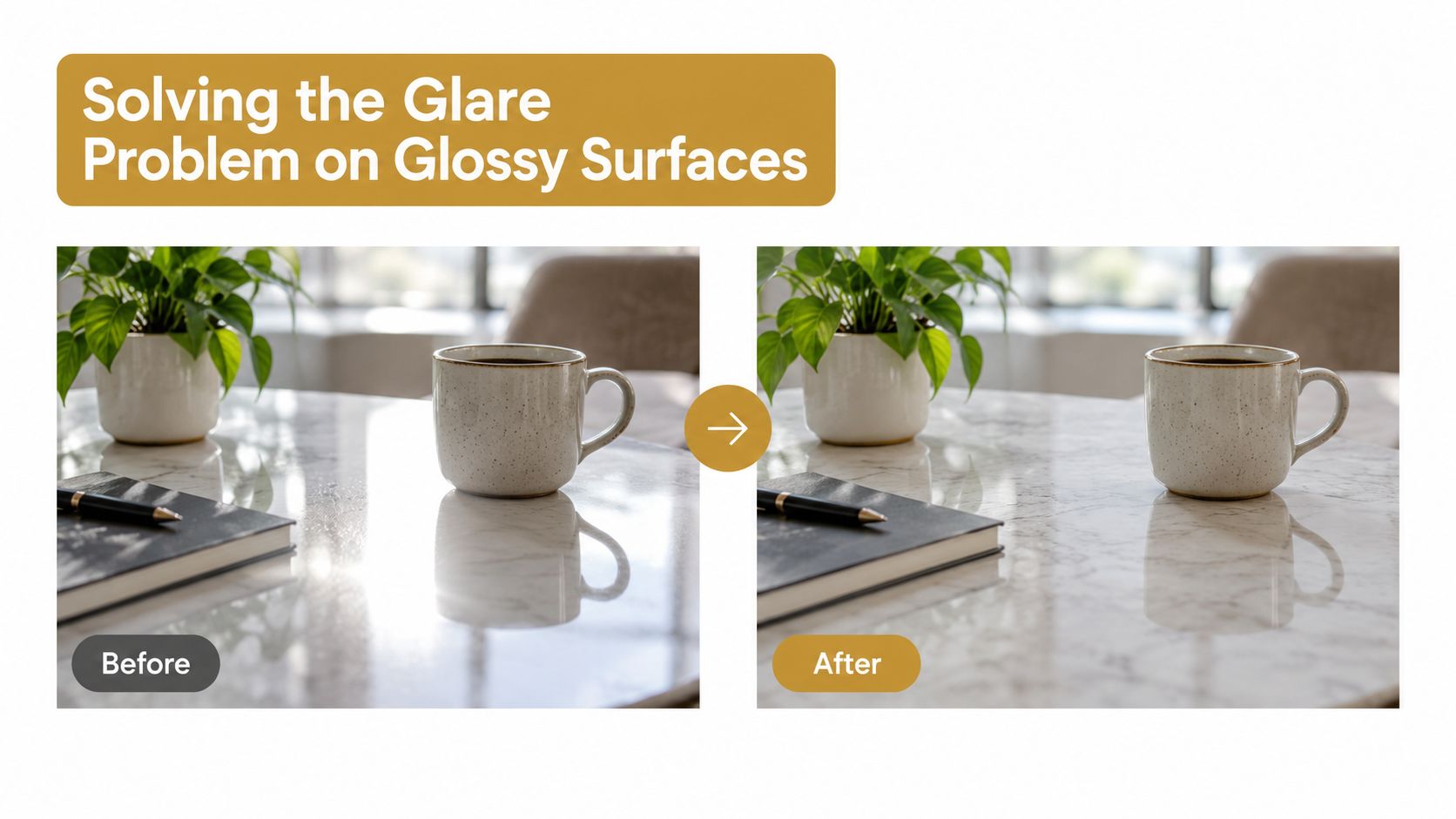
Glossy kitchens expose weak lighting plans quickly. Polished stone, glass backsplashes, reflective tile, lacquered cabinetry, and stainless appliances can turn a poorly aimed LED into a hard spot that distracts the eye rather than helping the person work.
Decorative pendants receive attention because they're visible, but they aren't automatically effective task lights. A beautiful shade positioned over the island may create a pleasant pool of light while the countertop beside the wall remains dim or reflective. The finish earns admiration, yet the person preparing dinner still squints.
Move the source forward
Under-cabinet linear lighting generally performs better when mounted near the front edge of the upper cabinet rather than pushed toward the backsplash. This position sends light across the counter from in front of the user and reduces the chance that the beam will bounce directly off a polished vertical surface.
The exact mounting position still depends on the cabinet construction and the backsplash angle. Before permanent installation, a temporary test can reveal whether the beam produces a bright streak, a harsh reflection, or a comfortable wash over the worktop.
Use diffusion and control
A diffuser softens the visible LED points and spreads the output more evenly. It can also reduce the sharpness of reflections on glass or polished stone. A dimmer gives the household control over the same fixture, allowing brighter task illumination during preparation and a lower setting during evening use.
Bulb selection affects the result as much as placement. The Golden Lighting bulb selection guide can help coordinate lamp characteristics with the fixture and the room's materials.
Pro-Tip: Test task lighting after the backsplash, countertop, and cabinet hardware are installed. A beam that looks controlled against drywall may reflect aggressively from finished stone or glass.
What works and what doesn't
- Works: A diffused linear source mounted toward the cabinet front, with dimming available.
- Works: Matte or lightly textured surfaces paired with controlled, directional light.
- Doesn't work: Exposed point sources aimed directly at polished backsplash tile.
- Doesn't work: Choosing maximum brightness without testing reflections at seated and standing eye levels.
- Needs caution: Narrow-beam downlights over glossy counters, especially when their aiming direction creates a direct reflection.
The contrarian conclusion is straightforward. The fixture that photographs best isn't necessarily the fixture that performs best over a cutting board. Kitchens need decorative expression, but usable light must win wherever glare and shadow affect daily work.
Choosing the Right Fixtures for Your Design Style
Fixture selection becomes easier once each product type has a defined responsibility. Pendants establish a focal point over an island, sconces add character at the wall, recessed downlights provide broad or targeted coverage, and under-cabinet strips handle the close work that ceiling fixtures miss.
The visual language can then follow the homeowner's taste without weakening the technical plan. Classic silhouettes and durable finishes suit a renovation intended to remain adaptable. Creative projects may benefit from coordinated but changeable elements, while high-end specifications call for controlled proportions, refined materials, and a finish that holds up across the entire sightline.
Compare the roles before the finishes
| Audience | Primary Goal | Recommended Collection | Best Fixture Type |
|---|---|---|---|
| Homeowner | Long-term value and easy coordination | Golden line | Pendants, semi-flush mounts, or sconces |
| Creative | Personalization and mix-and-match freedom | YEP by Golden | Interchangeable pendant or sconce combinations |
| Professional | Elevated specification and showroom presence | Ziva by Golden | Refined pendants, chandeliers, or architectural sconces |
For a homeowner, a classic pendant over the island can anchor the room without dictating every later choice. A matching or related finish on a nearby sconce creates continuity, while under-cabinet lighting remains visually quiet and functional.
YEP by Golden suits a more experimental approach. A creative can coordinate shades, finishes, and glass, then use the island, coffee station, or dining transition to introduce variation without making the kitchen feel accidental.
Ziva by Golden belongs in specifications where the fixture is part of the room's architectural character. Its showroom-forward presence can support a carefully edited scheme, especially when a designer is coordinating cabinetry, stone, hardware, and sightlines from an adjoining living area.
Golden Lighting offers these fixture families across kitchen-relevant formats, while its broader collections also include pendants and chandeliers. The decision should remain role-led: select the source for the visual and technical work it must perform, then refine the finish.
A wall sconce shouldn't be asked to illuminate a full island, and a pendant shouldn't be expected to replace cabinet lighting. The most coherent kitchen schemes let visible fixtures express the style while quieter sources deliver the performance.
How to Size and Space Your Kitchen Pendants
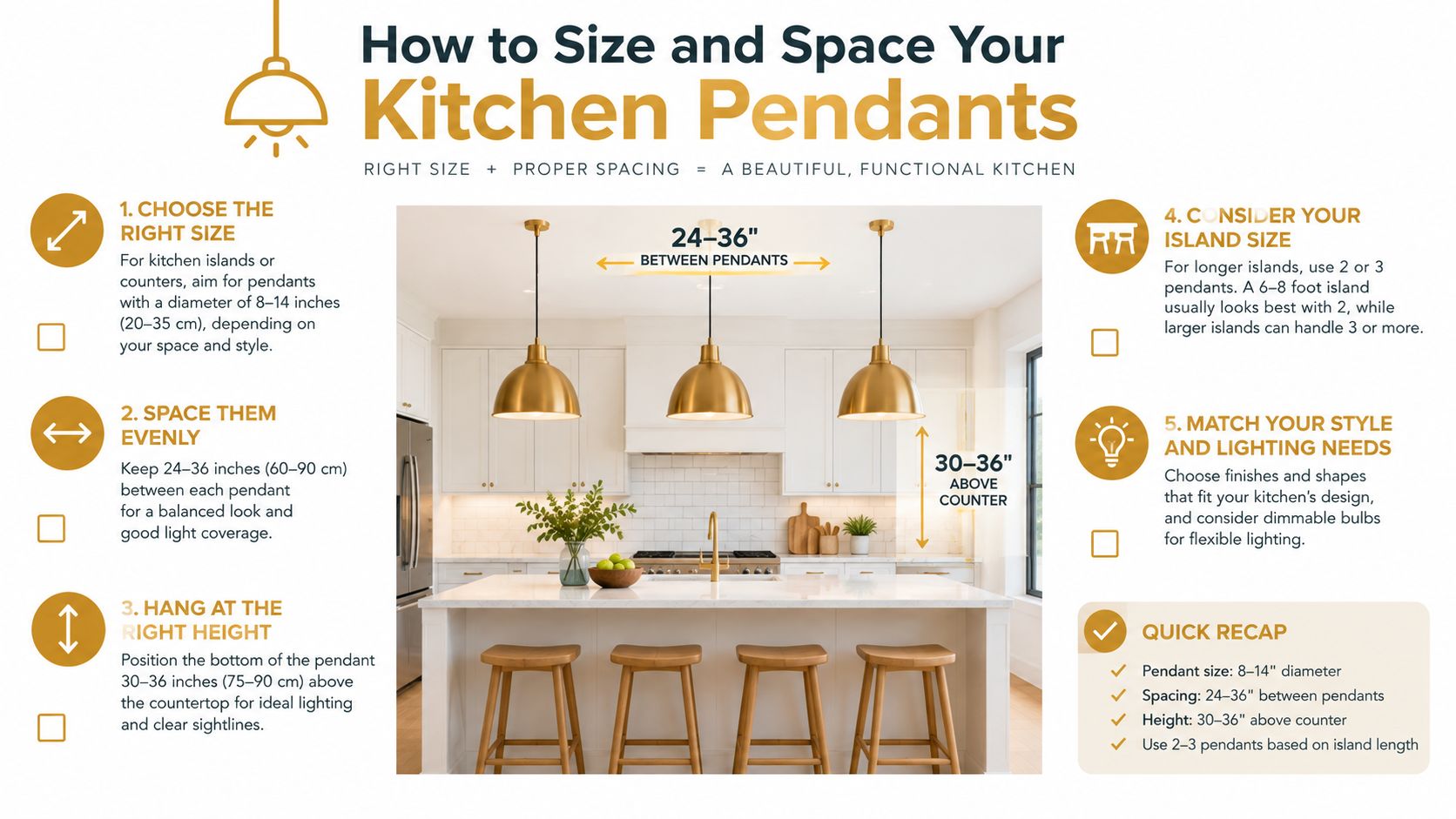
An island pendant can either clarify the room's proportions or make the entire kitchen feel crowded. The right choice depends on the island length, the fixture's visual mass, the ceiling height, and what the pendant must illuminate without obstructing conversation.
Start with the island rather than the fixture catalog. Measure the surface, note seating positions, and identify sightlines from the living and dining areas. Then select a silhouette that leaves comfortable visual space around cabinet doors, windows, and nearby architectural features.
Use proportion as the first filter
A single oversized pendant can work when the island has enough visual and physical room around it. Multiple smaller pendants create rhythm, but they need consistent spacing and should align with the working and seating zones rather than just filling the ceiling.
The pendant light size guide offers a useful reference for checking scale before purchase. A paper or cardboard template held above the island can also reveal whether the fixture will dominate the room or disappear against the cabinetry.
Set a comfortable hanging height
The fixture should hang low enough to illuminate the island and high enough to preserve sightlines across the kitchen. The final height depends on ceiling height, pendant construction, user height, and whether the island is primarily used for preparation, dining, or conversation.
Avoid treating a published hanging measurement as an absolute rule. A shade with an open bottom may distribute light differently from an opaque dome, and a long sculptural body can feel lower than its actual electrical drop.
Color temperature deserves equal attention. Task lighting — under-cabinet strips, range-hood lights — reads best around 4000K or higher, which favors pure work visibility, while ambient and accent layers are more comfortable in the warmer 2700K to 3500K range. The household should choose a coordinated temperature within each layer instead of mixing visibly different whites side by side.
For recessed downlights, placement should follow countertops and circulation rather than a uniform ceiling grid. Aim for even coverage over the active edges, then use pendants and cabinet lights to add character without creating a crowded ceiling.
Design check: Stand in the adjoining room and view the pendants from the main sightline. A fixture that looks balanced over the island may feel oversized when seen across an open-plan interior.
Treating the Kitchen as a Multi-Function Living Space
The kitchen now has to support more than meal preparation. A child may work at the island, guests may gather near the range, and someone may move through the room after dark without wanting full work-zone brightness. One undifferentiated lighting circuit makes all of these moments harder to manage.
The better response is to assign lighting scenes to activities. Cooking needs focused task light. Cleaning benefits from broad, honest visibility. Entertaining calls for softer accent sources, while nighttime navigation needs a restrained path through the room.
Let each activity control the mood
During food preparation, under-cabinet and range lighting should carry the functional responsibility. Ambient sources can remain active at a comfortable level, but decorative pendants shouldn't be forced to provide every lumen over the worktop.
Cleaning requires a different emphasis. Reflections, spills, and residue are easier to identify when the room has consistent illumination rather than isolated pools beneath pendants. Dimming can reduce intensity after the work is finished without eliminating useful orientation.
Entertaining benefits from the visual warmth of living-room fixtures. A pair of sconces near a coffee station, a decorative pendant over a secondary table, or a small lamp-like accent on a safe, clear surface can make an open kitchen feel more residential.
Build control into the electrical plan
Separate switching is the foundation. Ambient, task, accent, and low-level navigation sources should be independently controllable wherever the wiring plan allows. Dimmers then let the household tune brightness rather than choosing between full output and darkness.
Smart controls can extend that flexibility, but they shouldn't be used to hide a weak layout. Automation can schedule scenes, yet it can't correct a pendant that creates glare or an under-cabinet strip mounted behind the user's working position.
Market research reflects the scale of this broader shift. Grand View Research has estimated the global kitchen lighting category at roughly USD 15.69 billion in 2023, projecting growth to USD 23.85 billion by 2030 — a 6.4% CAGR. That trajectory points to continuing demand for integrated LEDs, pendants, recessed sources, and dimmable systems.
The commercial direction matters at home. As kitchens borrow more from living rooms, decorative elements should complement task lighting, never replace it.
Your Next Steps for a Brilliant Kitchen Design
A successful plan begins before the ceiling is closed. Mark the island, sink, range, prep counters, pantry route, cabinet interiors, and adjacent seating areas, then assign each location a lighting role.
Use this final checklist
- Establish ambient coverage: Provide a comfortable baseline for movement and broad visibility.
- Protect the work surface: Use forward-positioned task lighting to reduce shadows.
- Control reflective finishes: Add diffusers, dimmers, and careful aiming where stone, glass, or polished tile reflects light.
- Coordinate color temperature: Keep neighboring sources visually compatible within the chosen warm-to-task range.
- Size pendants by the room: Check the island, ceiling, cabinetry, and sightlines together.
- Separate the controls: Give cooking, cleaning, entertaining, and nighttime navigation distinct settings.
- Plan accent sources: Use sconces, cabinet interiors, toe-kick details, or decorative pendants to create depth.
The strongest kitchen lighting ideas form a system rather than a shopping list. A statement fixture can provide identity, but the long-term value comes from being able to see comfortably, control the mood, and move safely through the room at every hour.
Golden Lighting's collections can be explored alongside educational resources and showroom support, so homeowners, designers, and builders can compare finishes and fixture formats before committing. Start by mapping the zones, then shop the kitchen-relevant collections, review the upcoming 2026 catalog, or find a showroom near you to evaluate scale, diffusion, and finish in person.
— seen a lot of light fixtures in 80+ countries. Still learning what actually works in a home.











Share:
Chandelier Bronze Antique: How to Choose and Style It