


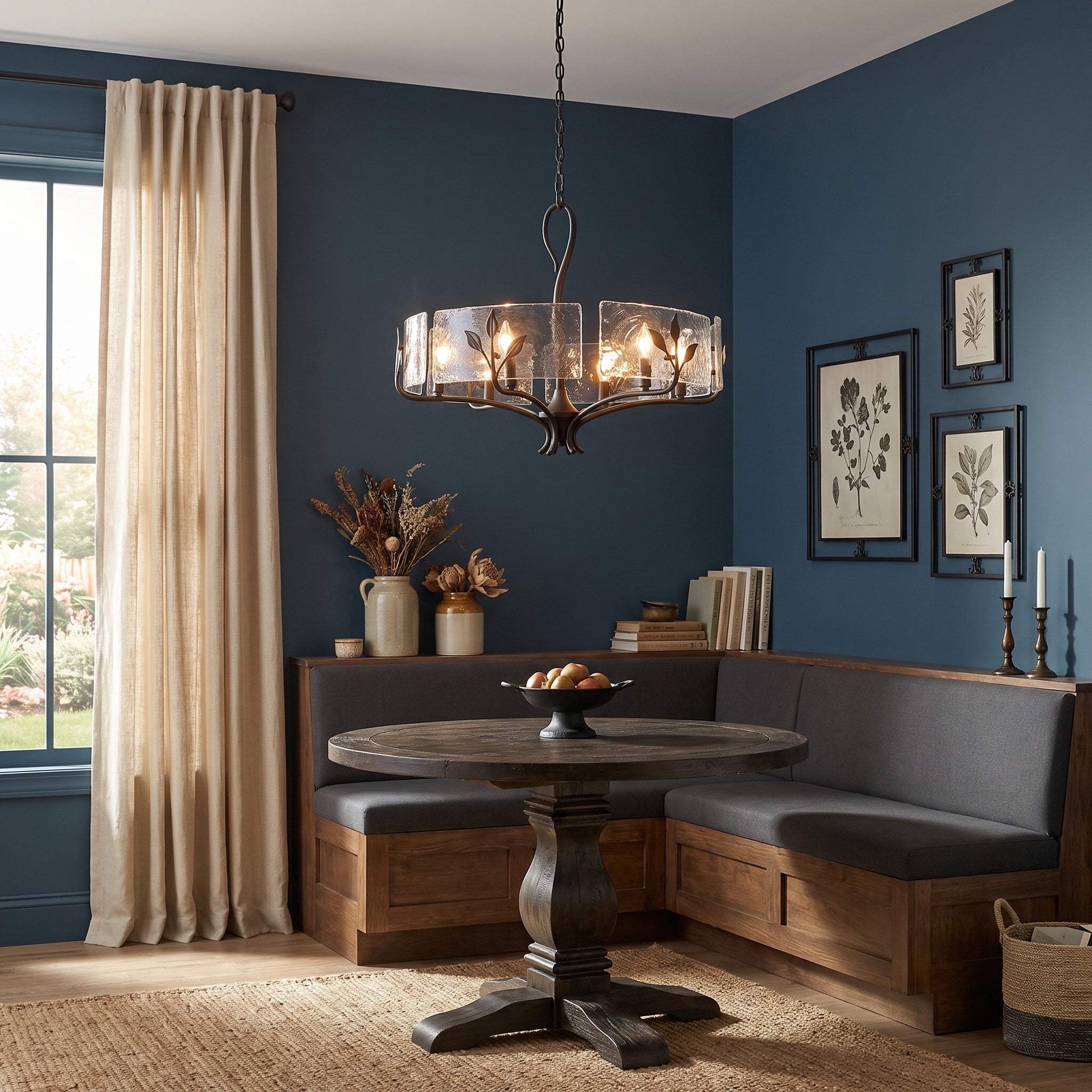
A room usually tells on itself before a homeowner does. The dining table feels adrift under a blank ceiling. The entry looks tall but oddly underdressed. The light works, yet the room still feels unfinished.

A chandelier often fixes that tension, but only when it's installed with discipline. A beautiful fixture can look wrong if it's undersized, hung too high, hung too low, or mounted to the wrong box. Worse, a rushed installation can create the kind of problem no one wants hidden above finished drywall.

From an operations and engineering standpoint, chandelier installation is never just décor. It's load support, geometry, electrical connection, and visual balance working together. The design team cares about proportion and presence. The factory floor cares about fit, hardware, and long-term stability. Both matter.

That's why learning how to hang chandeliers starts before a single wire nut is twisted. The strongest results come from treating the fixture as both a focal point and a permanently mounted electrical product. When those two ideas stay together, the result feels effortless. When they don't, the room shows it immediately.

An Introduction from Our COO

The most common chandelier problem isn't style. It's mismatch.

A homeowner finds a fixture they love, brings it home, and only then realizes the ceiling box sits off-center, the table below is narrower than expected, or the chandelier body fills the room in a way that looked much smaller in a showroom. The fixture isn't the issue. The planning was.

That's where experienced guidance changes the outcome. A chandelier should solve a room's tension, not create a new one. Over a dining table, it should define the surface below and make the room feel composed. In an entry, it should give height a purpose. In a bedroom or kitchen nook, it should add presence without crowding the volume of the room.

Good chandelier installations don't call attention to the math behind them, but they always rely on it.

The long-term view matters just as much. A secure mount, a properly rated box, and clean wiring aren't extras. They're what protect the fixture, the ceiling, and the home itself. That's the part many quick DIY guides skip. They focus on the chain and the crystals, but not the structure carrying the load.

A well-installed chandelier lasts because beauty and engineering were handled at the same time. That's the standard worth following.

The Blueprint Before the Beauty Sizing and Placement

A chandelier can be wired perfectly and still feel wrong the moment it goes up. I've seen that happen in model homes, custom builds, and renovations where the fixture itself was beautiful, but the scale, drop, or placement fought the room every day afterward.

That is why sizing comes before style selection. Our engineering team looks at proportion, load path, and clearance. Our design team looks at visual balance, sightlines, and how the fixture relates to furniture and architecture. The best installations satisfy both.

Start with the room, not the fixture

A reliable starting rule is simple. Add the room's length and width in feet, then use that total as the chandelier diameter in inches. In a 10-by-14-foot room, that points to a fixture around 24 inches wide, as noted earlier.

That guideline is not a law. It is a screening tool that helps narrow the field before you get distracted by finish samples and product photos.

In practice, three sizing mistakes show up again and again:

  • Too small: the chandelier reads like an afterthought and never gives the room a center of gravity.
  • Too large: the fixture crowds the ceiling plane and makes the room feel tighter than it is.
  • Wrong visual center: the chandelier may fit the dimensions, but still look misplaced if it ignores the seating group, island, or table below.

For homeowners comparing several diameters, a chandelier size calculator helps turn rough measurements into a tighter shortlist.

An infographic titled Chandelier Sizing and Placement Guide featuring four essential tips for choosing and installing chandeliers.

Use a different rule over a dining table

Dining rooms follow a different logic because the fixture answers to the table first. If the chandelier is centered to the room but not scaled to the table, people notice the mismatch immediately, even if they cannot explain why.

A good rule is to choose a chandelier about 12 inches narrower than the table. Hang height also matters. Over an 8-foot ceiling, the bottom of the fixture typically lands 30 to 34 inches above the tabletop, with a modest increase as ceiling height rises, as noted earlier.

That combination solves several problems at once:

Situation What works
Table-centered chandelier Keeps attention where people gather
Correct side clearance Leaves breathing room at the table edge
Proper hang height Preserves sightlines across the table and reduces bump risk

I also recommend mocking up the fixture's volume before you buy. Cut a cardboard circle to the proposed diameter, or suspend a simple placeholder from a ladder. It is one of the fastest ways to catch a sizing mistake before it becomes a return.

Bathrooms deserve the same discipline. A chandelier over a tub or in a large bath can work beautifully, but only if proportion and clearance are handled with the same care you would use in a dining room. For inspiration, this look at sophisticated bathroom lighting options shows how the fixture can support the architecture of the room rather than sit in it like an accessory.

Open rooms and foyers need clearance first

In foyers, halls, and open circulation areas, clearance leads the conversation. Kichler's foyer chandelier planning guidance recommends keeping the bottom of the fixture at least 7 feet above the floor, and sizing taller chandeliers in proportion to higher ceilings.

That advice holds up in the field because people move under these fixtures, not around them. A chandelier that looks dramatic on paper can become a daily nuisance if it hangs too low in a path of travel.

Tall spaces also need enough vertical presence. A fixture in a two-story entry should occupy the volume with intention, not disappear into it. The goal is not to make the chandelier bigger for the sake of drama. The goal is to choose a shape and drop that give the room a finished, grounded look from both levels.

Preparing for a Safe and Seamless Installation

A chandelier installation is usually won or lost before the fixture leaves the floor. I have seen beautiful pieces undermined by rushed prep, and the pattern is consistent. The design may be right, the finish may suit the room, and the scale may be perfect, but none of that matters if the support, power isolation, and hanging hardware are handled carelessly.

Kill power the right way

Start at the breaker. Then confirm the circuit is dead at the ceiling with a voltage tester. Do not rely on the wall switch, and do not assume the panel labeling is correct. Standard installation guidance also calls for verifying the power is off before any work begins, along with watching for incomplete power isolation and loose wire connections during the process, as outlined in this chandelier installation guide.

A person's hand turning off an electrical circuit breaker switch in a residential breaker panel box.

Good preparation is simple, but it needs to be disciplined.

  • Voltage tester: confirms the conductors are dead before you touch them
  • Stable ladder: gives you proper footing and keeps overhead work controlled
  • Screwdrivers and wire tools: helps you make clean connections with the right tools
  • Fixture instructions and hardware: avoids mid-install guesswork once the bracket, canopy, and chain are in hand

Check the ceiling box before lifting the fixture

The ceiling box carries the load. If it is loose, undersized, or not rated for the chandelier's weight, the installation stops until that is corrected.

This is the point where an engineering mindset protects the design. Chandeliers do not just add downward weight. They also create movement and rotational force, especially on longer stems and chain-hung fixtures. Tightening the canopy does not solve a weak attachment above it.

If the box moves when touched, the install pauses there. Cosmetics never outrank structure.

For readers who appreciate the broader logic of secure overhead mounting, the principles behind Colorado Art Services installation insights are worth noting. Heavy wall pieces and ceiling fixtures are different applications, but both depend on the same discipline: support the load from structure, not surface material.

Prep the hanging hardware before wiring

Chain length, cord length, and fixture drop should be set before the final electrical connection. That order saves time, reduces strain on the conductors, and makes the fixture easier to balance once it is overhead.

With adjustable chandeliers, I recommend dry-fitting the hanging components on the ground first. Confirm the final drop, remove excess chain if needed, and leave enough conductor length to route cleanly through the links and canopy. This guide to hanging a light with chain walks through that process clearly.

It is a small step, but it has long-term value. Clean wire routing prevents pinched insulation, reduces crowding inside the canopy, and gives the finished chandelier the calm, intentional look our design team aims for. That combination of sound support and clean visual execution is what separates a fixture that merely hangs from one that stays safe and looks right for years.

Mastering the Mount From Flat to Vaulted Ceilings

Flat ceilings are the easy case. The included mounting bracket attaches to the electrical box, the fixture hangs plumb, and the canopy covers the connection cleanly.

The challenge starts when the ceiling isn't flat.

Flat ceilings reward precision, not improvisation

On a standard ceiling, the mount should feel boring. That's a good sign. The bracket lines up with the box, the load transfers correctly, and the fixture body hangs straight without strain.

What tends to go wrong isn't complexity. It's impatience. Installers rush the bracket alignment, force the canopy, or leave the chain with an awkward twist that telegraphs itself every time someone enters the room.

Aenon 3-light Chandelier in Matte Black with Smokey Water Glass

One example of a fixture designed with more flexibility is the Aenon 3-light Chandelier in Matte Black with Smokey Water Glass. It measures 16.5"W x 8.38"H x 16.5"D and is described as fully adjustable, sloped-ceiling compatible, and convertible for semi-flush or pendant installation. Those attributes matter when a room doesn't fit the simplest install scenario.

Sloped and vaulted ceilings need different hardware

Many homeowners assume chandeliers and angled ceilings don't mix. That's not accurate. What changes is the hardware.

For nonstandard ceilings like sloped or vaulted ones, guidance often calls for swivel canopies and joist-supported electrical boxes so the chandelier hangs vertically and remains structurally sound, according to this sloped ceiling installation guide. The issue isn't just appearance. A chandelier that doesn't hang plumb can place awkward stress on the mount and look visibly wrong from across the room.

A reliable decision frame looks like this:

Ceiling condition What to prioritize
Flat Bracket alignment and clean canopy fit
Sloped Swivel canopy that lets the fixture hang vertical
Vaulted Structural box support and chain or rod alignment
High ceiling Fixture scale and suspension method

For readers furnishing dramatic vertical spaces, these chandeliers for high ceilings show why suspension style and fixture body shape matter just as much as finish.

A chandelier can adapt to a difficult ceiling. It can't compensate for the wrong mount.

That distinction is where engineering and design meet. The room may call for drama, but the mounting system still has to carry the load cleanly and keep the chandelier vertical over time.

Connecting the Current Wiring Your Fixture

A chandelier install usually feels hardest at the moment the wires come into view. From an engineering standpoint, this is the part that decides whether the fixture works reliably for years or gives trouble the first time someone changes a bulb or nudges the canopy during cleaning.

A close-up view of hands installing a chandelier, securely twisting and connecting electrical ceiling wires together.

Keep the sequence disciplined. Confirm the breaker is off with a tester, identify each conductor correctly, make the connections cleanly, and support the fixture while you work so no wire carries the fixture's weight. I have seen attractive installations fail early because the visual details got all the attention while the electrical connections were rushed.

Match the conductors carefully

Most residential chandelier installs come down to three pairings:

  • Hot to hot
  • Neutral to neutral
  • Ground to ground

Simple does not mean forgiving. The usual failure is not wire identification. It is a connection that looked finished but was never fully secured under the connector.

Make each splice deliberately, then give it a gentle pull-test before the wires go back into the box. If one conductor slips, remake it. A chandelier that flickers, cuts out intermittently, or only works when the canopy is loose often traces back to that missed check.

Color helps, but labeling and testing matter more in older homes. Renovated houses can have mixed wiring methods, faded insulation, or prior work that does not match current expectations. If the conductors are unclear, stop and verify before joining anything.

Give the wiring room inside the box

The box should close without force. Conductors need enough slack to sit naturally, but not so much that they bunch up behind the canopy and press against the connections. Pinched insulation and cramped splices create service problems later, especially in heavier fixtures that may need to come down for cleaning or re-leveling.

This is also where design and installation intersect. The chain or downrod length should already be set close to final before you make the electrical connection. That keeps the box organized and helps the canopy sit flat, which your eye reads as quality even if you never name the reason.

For readers who want a visual walkthrough of the overhead wiring sequence, this demonstration helps clarify the hand positions and pacing involved:

What usually causes trouble

Three problems account for a large share of failed DIY chandelier wiring jobs:

  1. The circuit still had power. The wall switch was off, but the breaker was not.
  2. The splice was incomplete. The connector felt snug, but the conductors were not fully captured.
  3. The box was overstuffed. Forcing the canopy into place disturbed the connections or damaged insulation.

Secure wiring should hold steady when the canopy goes on and stay reliable long after the install day.

If that standard feels outside your comfort level, hire for it. For local readers, hiring a handyman in Tacoma can be a practical option for basic fixture work. If the wiring is old, the box is questionable, or the circuit layout is unclear, bring in a licensed electrician instead.

Final Adjustments and When to Call a Professional

Once the fixture is mounted and wired, the last stage decides whether it looks professionally installed or merely attached.

Finish the fit and test the fixture

The canopy should sit flush and clean against the ceiling. The chain should hang naturally. The body of the chandelier should read as centered and balanced from the main viewing angles in the room, not just directly underneath it.

A close-up shot of a person installing a modern crystal chandelier onto a ceiling.

After the fixture is physically secure, restore power and test it before treating the job as complete. If one lamp doesn't illuminate, don't assume the whole fixture is faulty. Check the bulb first, then the socket, then revisit the wiring if the issue persists.

This is also the moment to step back and judge the result objectively. A chandelier can be electrically correct and still need minor chain adjustment or a slight rotation to present properly in the room.

Correct off-center boxes without compromising support

A common frustration appears when the ceiling box isn't centered over the dining table or other furniture below. The wrong fix is to let the chandelier hang visibly off-center and hope the eye forgives it. It won't.

A sanctioned correction is a swag installation using a ceiling hook anchored into a joist, which preserves support integrity while adjusting the visual placement, according to this swag-hanging reference. That approach keeps the load path tied to structure instead of asking an overextended chain to solve a layout problem it wasn't designed to solve.

A simple comparison makes the trade-off clear:

Approach Result
Leave the fixture at the box location The room feels visually off-balance
Overextend or misdirect the chain The support path becomes less disciplined
Use a joist-anchored swag hook The chandelier reads centered while preserving structural logic

Know when the smart move is to stop

Not every chandelier should be a DIY project. Some conditions should trigger a professional call immediately:

  • Older or confusing wiring: conductor identification isn't clear, or the box condition raises questions
  • Unusually heavy or complex fixtures: the mount and handling exceed normal homeowner comfort
  • Nonstandard ceilings with structural uncertainty: the chandelier may need specialty hardware or a revised support plan
  • Any hesitation around live electrical work: uncertainty itself is a valid reason to bring in help

For readers weighing outside help, practical local resources on hiring a handyman in Tacoma show the kind of screening questions that matter before inviting anyone to work overhead in a finished room.

The most cost-effective chandelier install is the one that doesn't need to be redone.

That's the final lesson. Learning how to hang chandeliers is part design judgment, part electrical discipline, and part restraint. The room benefits when all three show up.


A chandelier should do more than fill empty ceiling space. It should make the room feel settled, intentional, and safe for the long term. For more fixture ideas and room-specific guidance, shop chandelier collections at Golden Lighting.

Our latest lighting stories, trend forecasts, and design inspiration—curated just for you.

Fresh from The Edit

View all

How to Hang Chandeliers: Your Complete 2026 DIY Guide

Read moreabout How to Hang Chandeliers: Your Complete 2026 DIY Guide

Light Fixtures on Sale: A Pro's Buying Guide for 2026

Read moreabout Light Fixtures on Sale: A Pro's Buying Guide for 2026

Outdoor Wall Lamp Guide 2026: Find Your Perfect Light

Read moreabout Outdoor Wall Lamp Guide 2026: Find Your Perfect Light

Sconce Lighting with on Off Switch
  • by Rick Kovac

Sconce Lighting with on Off Switch

Read moreabout Sconce Lighting with on Off Switch

Guide to Outdoor Wall Lights White: Modern & Durable Options

Read moreabout Guide to Outdoor Wall Lights White: Modern & Durable Options

A Mirror with LED Lights: An Expert's Buying Guide

Read moreabout A Mirror with LED Lights: An Expert's Buying Guide

Smoked Glass Pendant Light: Elevate Your Home Style

Read moreabout Smoked Glass Pendant Light: Elevate Your Home Style

Hanging Light with Chain: Ultimate Guide 2026

Read moreabout Hanging Light with Chain: Ultimate Guide 2026

Shop Bathroom Vanity Lights Farmhouse
  • by Rick Kovac

Shop Bathroom Vanity Lights Farmhouse

Read moreabout Shop Bathroom Vanity Lights Farmhouse

Exterior Lights Fixtures: A Pro's Guide to Selection

Read moreabout Exterior Lights Fixtures: A Pro's Guide to Selection

Exterior Lights Fixtures: A Pro's Guide to Selection

Read moreabout Exterior Lights Fixtures: A Pro's Guide to Selection

Bathroom Vanity Lights Rustic: Expert Buying Guide

Read moreabout Bathroom Vanity Lights Rustic: Expert Buying Guide