


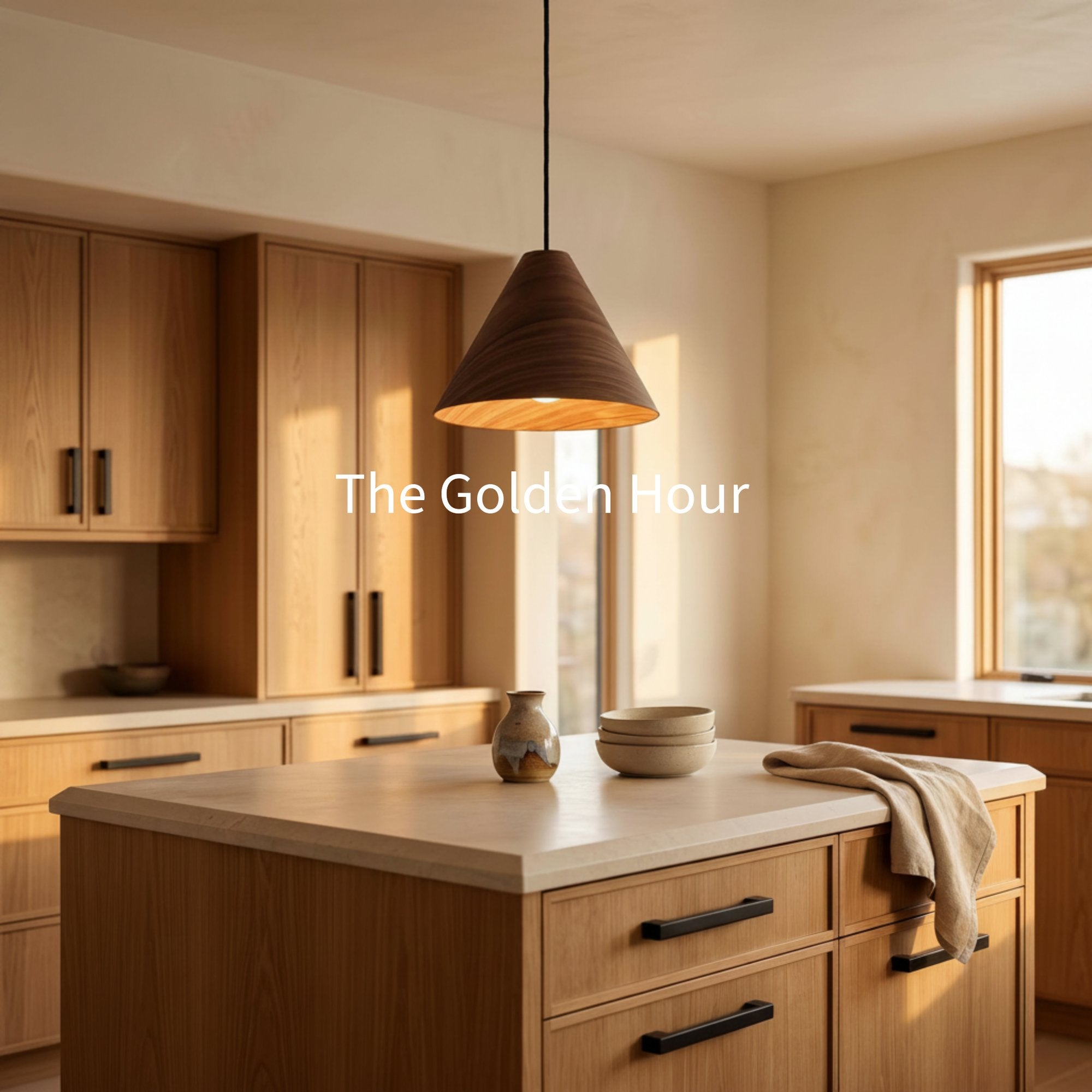
A kitchen table can be the busiest surface in the house and still feel forgotten. Meals happen there. Homework spreads out there. Late-night conversations land there. Yet in many homes, that spot sits under flat recessed light or a fixture that's the wrong size, too high, too harsh, or out of proportion.
That's why the chandelier over kitchen table decisions matter more than most homeowners realize. The right fixture doesn't just brighten a surface. It defines the zone, improves how the room works, and gives the kitchen a center of gravity that cabinets and countertops rarely provide on their own.
The Unsung Hero of Your Kitchen
A common scene plays out in kitchens everywhere. The cooking area is well planned, the appliances are solid, the finishes look intentional, but the table area feels like an afterthought. By evening, the island gets the attention and the kitchen table slips into shadow.
That imbalance changes the way the room feels. People don't linger where the light is wrong. They migrate away from glare, dim corners, and fixtures that block sightlines.

A well-chosen chandelier over kitchen table seating fixes that fast. It gives the table visual importance, draws people in, and creates a more complete room, especially in open-plan layouts where the kitchen has to function as workspace, dining room, and social hub.
Why the Table Zone Deserves Its Own Light
The table isn't filler space. It's where the kitchen becomes personal.
A chandelier or pendant cluster over the table does three jobs at once:
- Defines the dining area: It creates a boundary without adding walls.
- Improves comfort: It puts light where people sit, read, eat, and gather.
- Adds character: It gives a hard-working room a focal point with shape, finish, and material.
A kitchen can be efficient and still feel cold. Focused decorative lighting is what usually closes that gap.
Scale matters here, but so does furniture choice. Homeowners still deciding on the table itself will benefit from this practical guide on how to choose a dining table, because the fixture should relate to the table, not float as an isolated object.
The Real Payoff
From a top-down industry view, the strongest kitchens aren't always the largest or the most expensive. They're the ones where every layer has a purpose. The table light is one of the few elements that can shift mood, improve function, and enhance the room in a single move.
That's why this fixture is rarely optional. It's usually the missing piece.
How to Determine the Perfect Chandelier Size
A bad size choice ruins good lighting faster than any finish mistake. I have seen expensive fixtures sent back, rehung, and blamed for poor design when the actual problem was simple. The chandelier was never scaled to the table.

Start with the Table, Then Check the Room
The table is the working target. The room matters, but the chandelier has to belong to the furniture first.
According to City Lights' dining pendant sizing guidance, a chandelier or pendant usually looks right at about one-half to two-thirds of the table width. The same guide also notes that smaller rooms with standard 8-foot ceilings often call for fixtures under 24 inches in diameter, larger rooms with tall ceilings can support a wider fixture based on room dimensions, and multiple pendants should generally sit 24 to 36 inches apart.
Use that guidance with some discipline:
- Round or square tables: size the fixture from the table width or diameter.
- Rectangular tables: judge the fixture by the table width first, then decide whether the length needs one chandelier, a linear fixture, or multiple pendants.
- Heavy tables: choose a fixture with enough visual mass to hold its own against thick tops, bold bases, or wide seating.
- Airy tables: a lighter, more open chandelier can work without looking undersized.
Another sizing approach from Fabtiko's dining chandelier placement guide recommends a fixture closer to one-third of the table width. That proportion fits slim, minimal forms. In a kitchen, I usually advise going a bit larger unless the goal is intentionally quiet.
Small chandeliers disappear. Slightly generous chandeliers look planned.
If you are still confirming the table footprint itself, this dining table size guide helps you match the light to the actual surface, not a guess.
Hanging Height Decides Whether the Fixture Feels Right
Even a perfectly sized chandelier looks wrong if it hangs too high or too low. Height affects comfort, sightlines, and glare. It also exposes whether the installer understood the assignment.
For standard 8-foot ceilings, Chris Loves Julia's hanging guide places the bottom of the fixture 30 to 36 inches above the tabletop. The same article advises adding about 3 inches for each additional foot of ceiling height. Bellona USA's chandelier placement article also recommends centering the fixture over the full table length and keeping it roughly 30 to 34 inches above the surface for rectangular or oval tables.
That gives you a practical standard:
- 8-foot ceiling: 30 to 36 inches above the table
- 9-foot ceiling: 33 to 39 inches above the table
- Long table: center over the table itself, not the room
The eye should meet the chandelier naturally when seated, without staring into bare bulbs and without losing the fixture up near the ceiling line.
Use a Calculator, Then Apply Real Product Specs
Online calculators are useful because they narrow the range fast. Golden Lighting's chandelier size calculator for dining and kitchen spaces is a smart starting point before you commit to a fixture.
Then check the engineering details. A chandelier is not just a diameter on paper. Weight, body height, chain length, slope compatibility, bulb count, and lamping all affect whether the fixture will work over your table for the next ten years.
A strong example is the Golden Lighting Mirabella 6-light Chandelier in Matte Black. Its catalog dimensions are 25"W x 26"H x 25"D. It has adjustable hanging height, works on sloped ceilings, is rated for dry locations, and uses six E12 candelabra base bulbs up to 60 watts each. That combination tells you more than style alone. It tells you the fixture has enough presence for a real dining surface and enough installation flexibility to handle common kitchen layouts without compromise.
A Short Sizing Reference
| Table situation | Clear recommendation |
|---|---|
| Standard kitchen table | Choose a chandelier roughly half to two-thirds of the table width |
| Minimal visual look | A fixture around one-third of table width can work |
| Long rectangular table | Consider multiple pendants with 24 to 36 inches between them |
| Standard ceiling height | Hang the bottom 30 to 36 inches above the tabletop |
| Taller ceiling | Add 3 inches for each extra foot of ceiling height |
Matching Your Light to Your Lifestyle
Once the size is right, the style decision becomes far easier. At this point, homeowners either build a room with staying power or chase a look they'll want to replace too soon.
The right chandelier over kitchen table seating has to support daily life, not just photograph well. Kitchens are active rooms. Breakfast happens there. Laptops open there. Guests drift there even when there's a perfectly good living room nearby.

Pick a Finish That Can Survive Trends
Finishes carry more long-term value than people expect. Matte black stays relevant because it reads crisp and architectural. Brushed champagne brass softens a kitchen and works especially well when the room needs warmth without looking rustic. Natural materials such as rattan bring a relaxed mood, but they need the rest of the kitchen to support that story.
A strong finish choice should do at least one of these things:
- Bridge mixed materials: black can connect appliances, hardware, and window frames
- Warm a hard space: brass can offset stone, tile, and painted cabinetry
- Relax the room: woven textures can soften kitchens with lots of straight lines
The article on lighting for kitchen and dining room spaces is a helpful reference for readers trying to create that broader visual connection.
Choose Form Based on How the Table Gets Used
Shape should follow behavior.
An open-frame chandelier keeps sightlines easier and often feels lighter in compact kitchens. A drum or shaded fixture can feel more contained and traditional. A glass-forward silhouette can sharpen a modern room, while a more sculptural form turns the table into a statement zone.
Recent 2026 kitchen trends emphasize multifunctional dining spaces where lighting has to serve both dining and work tasks, and practical guidance includes bulb color temperature in the 2700 to 3000K range for warmth plus layered lighting with recessed fixtures to avoid shadowing and glare, according to 1800Lighting's kitchen table lighting ideas.
That matters because the fixture has to do more than look good at dinner.
A chandelier chosen only for appearance often fails by noon, when the table becomes a desk, project station, or reading spot.
Three Buyer Types, Three Smart Paths
Different households should make different style decisions.
For the homeowner: Classic silhouettes win. They're easier to live with, easier to resell around, and easier to pair with changing paint, hardware, and seating over time.
For the creative: YEP by Golden makes sense because customization matters more than fixed perfection. Mix-and-match shades, finishes, and glass give the room personality without forcing a full custom process.
For the professional eye: Ziva by Golden speaks to projects that need a more refined, showroom-forward presence. Those spaces usually benefit from cleaner detailing, stronger material discipline, and a more edited decorative point of view.
What Holds Value Over Time
The longest-lasting chandeliers usually share the same traits:
- Clear geometry: simple forms age better than novelty shapes
- Versatile finish language: black, brass, and glass stay useful across remodel cycles
- Material honesty: real texture and visible construction read better over time than visual gimmicks
That's the lens worth using. Style should express personality, but it should also hold up after the trend cycle moves on.
Mastering Light Performance and Ambiance
A chandelier can be perfectly sized and beautifully finished, then still fail the room. Poor light quality does that.
On the manufacturing side of the industry, the difference between decorative success and disappointment often comes down to output, warmth, and control. People don't complain that a fixture is “technically wrong.” They say dinner feels too harsh, the table feels gloomy, or faces look tired under the light.

What to Pay Attention To
The key performance terms aren't complicated once they're tied to experience.
- Lumens: This is brightness. More lumens means more visible light.
- Kelvin: This is color temperature. Lower Kelvin feels warmer and softer.
- CRI: This affects how natural food, finishes, and skin tones appear.
- Dimming: This gives the fixture range instead of one fixed mood.
The visual guide above includes performance targets, but the clearest takeaway for kitchen dining zones is color temperature. Warm light usually feels better at the table than cool, clinical light.
The Non-Negotiable Choices
For a kitchen table, warm light wins. Guidance tied to current kitchen dining use points to 2700K to 3000K as the right range for warmth, as noted earlier from the cited kitchen lighting source.
Beyond bulb selection, the biggest performance upgrade is simple:
Install a dimmer. A chandelier without dimming gives the room one mood, and one mood is never enough in a kitchen.
A table hosts different activities across the day. Morning coffee wants clarity. Homework needs stronger output. Dinner wants softness. Dimming is what turns a decorative fixture into a useful one.
Pro-Tip Box
Pro-Tip
Layer the chandelier with recessed or nearby ambient lighting instead of forcing one fixture to do every job. The chandelier should shape the table zone. Supporting lights should fill the room and reduce shadows.
That layered approach creates a kitchen that works during meal prep and still feels calm when the day slows down. It also keeps the chandelier from being over-lamped just to compensate for poor general lighting.
Installation and Long-Term Care
A quality fixture can last for years, but only if the installation respects the room and the hardware. Otherwise, good products get undermined by rushed placement, poor alignment, or skipped maintenance.
The first decision isn't decorative. It's positional. The fixture belongs over the table, not wherever the ceiling box happens to sit if that location throws off the composition.
Start with this visual checklist.

Placement Comes First
One of the most common mistakes is misalignment. Lightsstory's chandelier installation guide notes that 35% of DIY installations report misalignment, often because the table was moved after installation, and it advises homeowners to test sightlines by sitting at the table to confirm there's no glare or obstruction.
That's practical advice. A centered fixture should align with the table's actual position, not the room's geometry on paper.
For readers reviewing the hanging process in more detail, this guide on how to hang chandeliers is worth bookmarking before the electrician arrives.
What to Watch During Installation
Even when a licensed electrician handles the work, homeowners should still oversee a few essentials:
- Confirm centering: Measure from the table edges, not just from walls.
- Check adjustability: Make sure chain, stem, or hanging length is set for the room's real use.
- Test seated sightlines: Sit down before finalizing height.
- Verify bulb plan: Use the intended bulb type before judging the final look.
This installation walkthrough adds useful visual context:
Care That Protects the Investment
Long-term care doesn't need to be complicated. It needs to be consistent.
A smart maintenance routine looks like this:
| Task | Why it matters |
|---|---|
| Dust the fixture regularly | Dust dulls finish, glass, and light output |
| Clean material-appropriate surfaces carefully | Glass, metal, and natural textures need different handling |
| Replace bulbs thoughtfully | Mismatched bulbs create uneven color and mood |
| Recheck hardware over time | Hanging components should stay secure and level |
A chandelier over kitchen table seating is a working part of the home, not museum decor. If it's installed with precision and maintained with a little discipline, it will keep performing long after trend-driven fixtures start to feel disposable.
Frequently Asked Questions
What size chandelier do I need for my kitchen table?
As a general rule, choose a chandelier that's about 50–65% of your table's width. Very minimal, slim silhouettes can go as small as one-third of the table width, but in a kitchen setting we recommend sizing toward the larger end of that range so the fixture doesn't disappear over a busy, well-used table.
How high should I hang a chandelier over a kitchen table?
Hang the bottom of the fixture 30 to 36 inches above the tabletop for a standard 8-foot ceiling. Add about 3 inches of extra clearance for every additional foot of ceiling height — so a 9-foot ceiling calls for roughly 33 to 39 inches.
What color temperature is best for kitchen table lighting?
Aim for 2700K to 3000K. This warm range feels more inviting at the table than cooler, clinical light, and it pairs well with layered ambient lighting like recessed fixtures.
Should I use one chandelier or multiple pendants over a long table?
For long rectangular tables, multiple pendants often work better than a single chandelier. Space them 24 to 36 inches apart, centered over the table itself rather than the room.
Do I need a dimmer for my kitchen table chandelier?
Yes. A kitchen table supports different activities throughout the day — bright, clear light for morning coffee and homework, softer light for dinner — and a fixed-output fixture can't adjust to that. A dimmer is one of the highest-impact, lowest-cost upgrades you can make.
What's the most common mistake when installing a chandelier over a table?
Misalignment is the most frequent issue — roughly 35% of DIY installations report the fixture sitting off-center, often because the table was moved after the light was installed. Always sit at the table after installation to check for glare or obstruction before calling the job done.
Can a chandelier over a kitchen table be on a sloped ceiling?
Many chandeliers, including models like Golden Lighting's Mirabella 6-light chandelier, are rated for sloped-ceiling installation with adjustable hanging height. Always confirm slope compatibility and adjustable chain/stem length before purchasing if your kitchen has vaulted or angled ceilings.
Light Up Your Kitchen with Confidence
The right chandelier over kitchen table placement isn't guesswork. It's a sequence of smart decisions. Get the scale right. Choose a finish and form that match how the room is used. Then make performance and installation decisions that protect the investment.
That's where long-term value lives. Not in impulse buying. Not in oversized drama. Not in a fixture that looks good for a week and annoys everyone after that.
The strongest kitchen lighting choices respect both engineering and atmosphere. They create comfort, preserve sightlines, support multiple uses, and give the table a real role in the room. That's what turns a kitchen from merely functional into memorable.
For homeowners, the goal is clarity and ease. For creative buyers, it's personal expression. For design professionals, it's proportion, finish discipline, and enduring visual balance. The right fixture can do all three when the selection is grounded in measurement and purpose.
Ready for the next step? Shop Golden Lighting chandeliers, explore pendant lighting, browse outdoor lighting, or download the 2026 catalog.











Share:
Dining Room Lighting for Low Ceilings: Brighten Your Space