


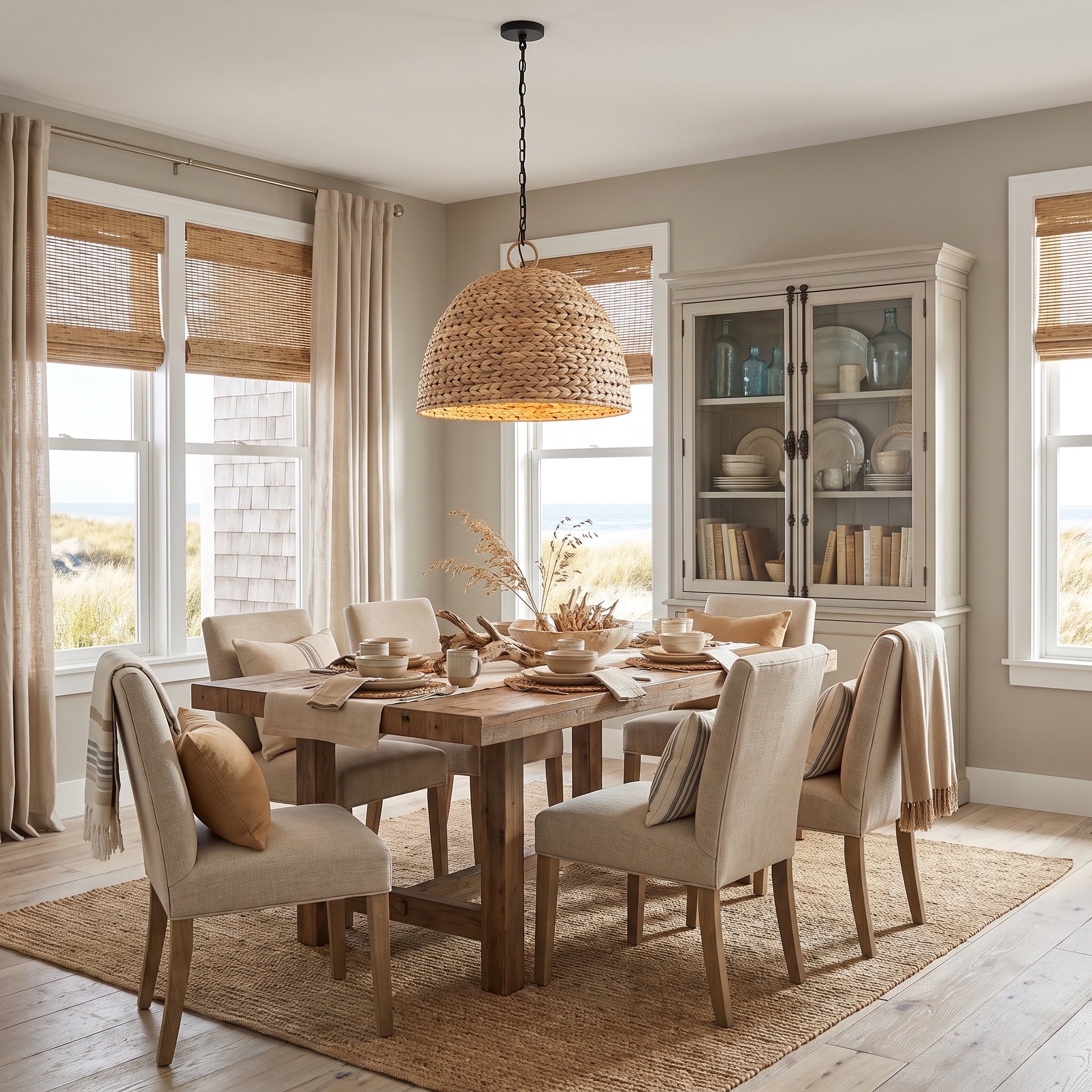
A kitchen can look beautifully finished and still fail the moment dinner starts. Shadows fall across the counters, the island becomes a glare point, and the dining table feels either dim or uncomfortably bright. That problem isn't about décor. It's about planning the light with the same care given to cabinetry, surfaces, and layout.

Lighting for kitchen and dining room spaces works best when it starts with function and ends with atmosphere. That order matters. A room has to support prep, cleanup, serving, and conversation before it can feel polished. For readers shaping a remodel, lighting ideas for a modern kitchen can also help frame how fixture style and layout work together in a contemporary plan.

From a product development and engineering standpoint, the projects that hold up best over time follow one discipline. They layer light instead of relying on a single overhead fixture. That approach gives a kitchen better visibility, gives a dining area better mood, and gives the entire room a more intentional rhythm.

Good lighting doesn't ask one fixture to do every job. It assigns each job to the right tool.

The Three Layers of Professional Lighting Design

A professional lighting plan is rarely complicated. It is disciplined. The strongest results come from ambient, task, and accent lighting working together, each with a clear role.

A diagram illustrating the three layers of interior lighting including ambient, task, and accent lighting.

Readers who want a broader overview of this method can review Golden's guidance on how to layer lighting.

Ambient light fills the room

Ambient lighting creates the base level of illumination. In kitchens and dining rooms, that usually comes from recessed fixtures, flush mounts, semi-flush mounts, or a chandelier that spreads light outward rather than sharply downward.

This layer handles orientation. It makes the room usable when someone walks in early in the morning or moves through the space at night. Without it, every other layer has to work too hard.

Task light solves the work zones

Task lighting belongs where hands and eyes are busy. That means counters, sinks, prep surfaces, cooktops, and sometimes buffet or serving areas near the dining space.

Under-cabinet lighting is one of the most practical examples because it directs light exactly where overhead fixtures often create shadows. Pendants can also serve a task role over an island when they are positioned and scaled correctly.

Accent light gives the room depth

Accent lighting is where many rooms move from merely functional to finished. A wall sconce, a picture light, a softly glowing glass fixture, or a decorative chandelier can define a focal point and keep the room from feeling flat.

A fixture like the Dorinda 2-Light Vanity Light in Matte Black with Opal Glass shows how this works outside a bath setting as well. Its transitional form, scalloped opal glass, and warm glow make it suitable for a pantry passage, breakfast nook wall, or a dining-side accent application where softness matters. Its listed dimensions are 16.25"L x 11"H x 7.5"E, and it uses 2 x 100W(M) Type A incandescent bulbs.

  • Ambient: supports movement, visibility, and overall comfort.
  • Task: targets prep and work surfaces where precision matters.
  • Accent: shapes mood, highlights form, and makes the room feel layered.

A room that depends on only one of these layers usually feels unfinished. A room that uses all three feels calm because each light source has a job.

Choosing Your Fixtures The Toolkit of Illumination

The fixture category matters because each type throws light differently. Shape, shade, mounting style, and beam direction all affect whether a room feels balanced or frustrating.

Golden Lighting Conique 1-light 10in Pendant in Dark Walnut - - Golden Lighting

Pendants and chandeliers define the active surfaces

Pendants belong over islands, peninsulas, and breakfast bars when focused downward light is needed with visual presence. Chandeliers belong over dining tables when the goal is to anchor the furniture grouping and bring the eye down into the room.

The common mistake is choosing these fixtures only by silhouette. A pendant can look perfect online and still cast poor working light if the shade is too closed. A chandelier can look dramatic and still fail at the table if it hangs too high or washes light into the room instead of onto the surface.

For dining-specific selection guidance, this resource on how to choose a chandelier for your dining room is a useful reference.

Recessed lighting carries the background load

Recessed lights are the workhorses in many kitchens because they keep the ceiling clean and distribute ambient illumination without adding visual bulk. They are especially effective in lower-ceiling rooms or kitchens with a lot of cabinetry and venting equipment competing for attention.

What doesn't work is using recessed cans alone and expecting the room to feel finished. That usually leads to a ceiling full of light points and a room with very little character.

Under-cabinet lighting fixes the shadow problem

This is one of the most reliable upgrades in kitchen lighting. Upper cabinets block overhead light, so counters often end up darker than the rest of the room. Under-cabinet fixtures correct that directly.

For homeowners refining the whole room, window treatments matter too because daylight softness changes how fixtures read during the day. Those comparing textiles can review Joey'z Shopping linen window treatments for kitchen-friendly fabric direction.

Sconces and decorative wall lights add polish

Sconces are often overlooked in kitchen and dining plans, but they are useful where a wall needs definition or where a dining zone needs lower, more atmospheric light. They can soften transitions in open plans and help a room feel intentional after sunset.

A practical rule helps when sorting fixtures by role:

  • Choose pendants when the surface below needs directional light and visual emphasis.
  • Choose chandeliers when the table or dining zone needs a central focal point.
  • Choose recessed fixtures when the ceiling needs quiet, even coverage.
  • Choose under-cabinet lighting when counters are shadowed by upper storage.
  • Choose sconces when the room needs a secondary layer at eye level.

A quick visual walkthrough can help before finalizing a plan.

How to Size and Place Fixtures Like a Pro

Most lighting mistakes are sizing mistakes. A fixture can be beautiful, well made, and completely wrong for the room if its scale or hanging height is off.

An infographic showing professional placement tips for hanging kitchen and dining room lighting fixtures.

For detailed planning support, Golden's article on determining the right size light fixture for kitchen and dining room spaces is a strong companion resource.

Start with the table, not the ceiling

For dining areas, the fixture should relate to the table first. A chandelier's diameter should be roughly half the table's length, and it should hang 30 to 34 inches above the tabletop. In rooms with higher ceilings, that height can increase to 36 to 40 inches according to the sizing guidance in this kitchen lighting guide.

That rule works because diners experience the fixture in relation to the tabletop, sightlines, and surrounding chairs. Centering only to the room often produces a floating fixture that doesn't serve the furniture below.

Think of lumens as output and Kelvin as tone

Homeowners often get tangled in lighting terminology. The simpler approach is this:

  • Lumens tell how much light a source gives off.
  • Kelvin tells whether that light looks warmer or cooler.

Brightness without proper placement still fails. A high-output fixture mounted too high can leave the table visually disconnected. A warm bulb in the wrong task location can make prep work feel dull.

Quick Sizing & Placement Guide

Fixture Type Placement Rule of Thumb
Chandelier over dining table Centered to the table Diameter should be roughly half the table's length
Chandelier over dining table Height above tabletop Hang 30 to 34 inches above the table, or 36 to 40 inches for higher ceilings
Pendant over island Centered to the work surface Align to the island, not simply to the room
Recessed lighting Across kitchen ceiling Space for even coverage and avoid leaving task areas in shadow
Wall sconces Dining side walls or transition walls Use to add lower-level glow and visual depth

Pro-Tip
Before ordering a large pendant or chandelier, mock up the fixture with a balloon, paper template, or cardboard cutout. Suspend it at the intended height and view it from the entry, the sink, and seated positions at the table. This catches scale mistakes before they turn into returns and rewiring.

Placement is where engineering and aesthetics finally meet. The fixture must look right, but it also has to clear sightlines, avoid glare, and put light where people use the room.

The Science of Light Bulbs Color and Controls

A good fixture can only perform as well as the lamping and controls behind it. Many kitchen and dining projects lose clarity at this stage. The hardware is attractive, but the light itself is too dim, too cold, too harsh, or impossible to adjust.

A glowing filament light bulb stands on a dark laboratory table with scientific equipment in the background.

Use lumen targets that match the work

For kitchens, general lighting should deliver 30 to 40 lumens per square foot, while countertops and sinks need 70 to 80 lumens per square foot for safer, more precise food preparation, as outlined in this lumen guide for ceiling lights.

That distinction is critical. The room doesn't need one flat blanket of light. It needs stronger output where knives, measuring, rinsing, and reading happen.

Choose color temperature by zone

Style cohesion does not require every fixture to produce the same feel. In fact, better rooms often use controlled contrast.

A kitchen benefits from a cleaner, more alert light at the work surfaces. A dining area benefits from a softer tone that supports conversation and food presentation. Matching finishes across zones often creates visual unity. Matching bulb tone everywhere often makes the room less usable.

  • Kitchen prep zones: lean cooler and clearer.
  • Dining zones: lean warmer and more relaxed.
  • Transition areas: use dimming to keep the shift from feeling abrupt.

The most flexible room is not the one with the most fixtures. It is the one with the best controls.

Dimmers are not optional

A dimmer is the single most effective upgrade in a shared kitchen and dining space. It lets one room shift from breakfast prep to homework to dinner service without feeling overlit or underlit.

This also opens the door to more creative coordination. A reader working with YEP-style mix-and-match thinking might pair a cleaner metal finish and simple shade shape in the kitchen with a warmer, softer glass expression over the table. That works because the controls allow each zone to behave differently while still reading as one design story.

Creating a Cohesive Style Across Your Space

Open-plan rooms need coordination, not duplication. That's the difference between a space that feels designed and one that feels like matching fixtures were dropped into neighboring zones.

A modern open-concept kitchen and dining area with wooden cabinets, a large island, and stylish pendant lighting.

The color of the light plays a major role in that transition. For a smooth shift between zones, use 4000K to 5000K in kitchen task areas and 2700K to 3000K over the dining table to create a more relaxed mood, as noted qualitatively in the earlier sizing and placement discussion.

Layout one with a visible island and adjacent table

In a common open kitchen, the island sits in full view of the dining table. The strongest move is usually to keep a related finish family across both fixtures, then vary the form. Slim pendants can keep the kitchen purposeful while a broader chandelier gives the table presence.

If the wall color is still unsettled, it helps to review how paint undertones will affect metal and glass. Homeowners sorting that piece of the remodel can compare paint shades for your remodel before final fixture selection.

Layout two with a long galley feel

A galley-style kitchen opening into a dining nook often needs restraint. Too many decorative fixtures make the space feel chopped up. A cleaner solution is recessed ambient light through the kitchen, under-cabinet task light along the work run, and one statement piece above the dining table.

Showroom-forward styling can anchor the room here. A more sculptural Ziva-type dining fixture can hold the visual weight, while the kitchen stays quieter and more architectural.

Layout three with mixed personalities

Some homes lean traditional in the dining area and more modern in the kitchen. That mix can work well if the connection is intentional.

  • Repeat a finish: matte black, aged brass, or another shared metal can tie different silhouettes together.
  • Repeat a shape language: rounded glass, linear stems, or soft curves can bridge styles.
  • Repeat the light quality: even when fixture forms differ, balanced control and thoughtful bulb selection keep the room coherent.

Design note: A cohesive room rarely comes from buying a matching set. It comes from repeating one or two visual cues while letting each zone answer its own function.

Putting It All Together Example Lighting Plans

Theory matters less than application. Two layouts show where these principles hold and where they save a renovation from unnecessary compromise.

L-shaped kitchen with island and dining edge

This layout usually needs a layered grid rather than a single centerpiece. Recessed ambient light can provide the room-wide base. Pendants over the island then bring light down to the work plane and visually separate prep from circulation. Under-cabinet light handles the counter runs where upper cabinets create shadows.

At the dining edge, a chandelier or centered pendant should relate to the table, not to the island. That small distinction keeps the room from feeling as if one fixture scheme drifted into the other. The kitchen reads as functional. The table reads as intentional.

Open-plan room with an off-center electrical box

This is one of the most common field conditions in older homes. Open-plan spaces with off-center electrical boxes or sloped ceilings are common in over 40% of U.S. homes built before 1980, and adjustable systems or sloped-ceiling-adaptable fixtures can address the issue without costly rewiring, according to this discussion of challenging ceiling conditions.

That matters because perfect centering isn't always the smartest move. In a combined kitchen and dining room, a multi-pendant fixture, track system, or adaptable canopy can often create visual balance more effectively than opening the ceiling and chasing a new junction point.

What works and what does not

A few hard truths tend to hold across projects:

  • What works: assigning stronger light to prep zones and softer light to dining.
  • What works: scaling the dining fixture to the table instead of to the room.
  • What works: using controls so the same space can change mood across the day.
  • What does not: relying on one decorative fixture to light both kitchen labor and dining ambiance.
  • What does not: centering every fixture to architecture when the furniture tells a different story.
  • What does not: treating awkward electrical placement as a reason to settle for poor balance.

Rooms become easier to live with when lighting follows real use patterns. That is where design discipline creates long-term value.

Conclusion Your North Star for Lighting

Great lighting for kitchen and dining room spaces comes down to three decisions. Layer the light, size the fixtures correctly, and choose the right brightness and color for each zone. Ready to bring that vision to light? Shop our full collection of Chandeliers, Pendants, and more to find the right fixtures for your home.

Our latest lighting stories, trend forecasts, and design inspiration—curated just for you.

Fresh from The Edit

View all

Outdoor Wall Lamp Guide 2026: Find Your Perfect Light

Read moreabout Outdoor Wall Lamp Guide 2026: Find Your Perfect Light

Sconce Lighting with on Off Switch
  • by Rick Kovac

Sconce Lighting with on Off Switch

Read moreabout Sconce Lighting with on Off Switch

Guide to Outdoor Wall Lights White: Modern & Durable Options

Read moreabout Guide to Outdoor Wall Lights White: Modern & Durable Options

A Mirror with LED Lights: An Expert's Buying Guide

Read moreabout A Mirror with LED Lights: An Expert's Buying Guide

Smoked Glass Pendant Light: Elevate Your Home Style

Read moreabout Smoked Glass Pendant Light: Elevate Your Home Style

Hanging Light with Chain: Ultimate Guide 2026

Read moreabout Hanging Light with Chain: Ultimate Guide 2026

Shop Bathroom Vanity Lights Farmhouse
  • by Rick Kovac

Shop Bathroom Vanity Lights Farmhouse

Read moreabout Shop Bathroom Vanity Lights Farmhouse

Exterior Lights Fixtures: A Pro's Guide to Selection

Read moreabout Exterior Lights Fixtures: A Pro's Guide to Selection

Exterior Lights Fixtures: A Pro's Guide to Selection

Read moreabout Exterior Lights Fixtures: A Pro's Guide to Selection

Bathroom Vanity Lights Rustic: Expert Buying Guide

Read moreabout Bathroom Vanity Lights Rustic: Expert Buying Guide

Bathroom Vanity Light Gold: 2026 Trends & Buying Guide

Read moreabout Bathroom Vanity Light Gold: 2026 Trends & Buying Guide

Powder Room Lights: Flawless Design & Placement

Read moreabout Powder Room Lights: Flawless Design & Placement