


A powder room usually gets attention last. The tile is chosen, the mirror is hung, the faucet finish is approved, and then someone drops in a single ceiling light and calls it done. That's exactly why so many powder rooms feel dim, harsh, or oddly theatrical in the worst way.
Guests notice this room more than homeowners expect. It's where someone checks a reflection, adjusts a collar, smooths lipstick, or takes in the design details up close. In a compact space, poor lighting doesn't hide. It magnifies every mistake, from forehead shadows to mirror glare to wallpaper that looks flat instead of rich.
Why Your Powder Room Lighting Matters Most
A guest steps into a powder room, glances in the mirror, and notices the light before anything else. In a small room, there is no distance to soften shadows, no extra fixture to correct a mistake, and usually no daylight to rescue the finish choices you made.

A powder room has to do a lot in very little square footage. The lighting needs to flatter faces, give clear mirror visibility, and make the room's materials look intentional rather than harsh or underlit.
That is why powder room lights need tighter planning than fixtures in a larger bath. In a primary bathroom, poor lighting can get masked by a bigger mirror, more ceiling coverage, or natural light. In a powder room, every flaw shows up fast.
Small room, high visibility
Powder rooms often carry the boldest design moves in the house. Rich wallpaper, darker paint, sculptural mirrors, and reflective finishes all look stronger in a compact envelope. They also raise the stakes for the lighting.
I see the same mistake often in small layouts: the fixture gets chosen as jewelry first and a light source second. The result is predictable. A decorative fixture with weak forward throw leaves the face flat or shadowed. A bare bulb near a tight vanity wall creates direct glare. One recessed can over the sink throws shadows under the eyes and nose, which is the least forgiving effect possible in a room built around a mirror.
Powder room lights aren't an accessory decision. They're a hospitality decision.
Why this room is harder than it looks
Small powder rooms come with real constraints, and each one changes the lighting strategy.
- Narrow walls limit whether sconces can fit beside the mirror without feeling cramped.
- Low ceilings push the design toward shallow flush or semi-flush fixtures instead of pendants that hang into the sightline.
- Tight vanity widths leave very little tolerance for a fixture that is too wide, too tall, or visually heavy.
- Glossy tile, lacquer, stone, and metal finishes reflect light hard, so glare control matters more here than in a larger bath.
Good powder room lighting solves those constraints without losing character. Sometimes that means choosing a simpler ceiling fixture so the mirror wall can do the visual work. Sometimes it means skipping the dramatic exposed bulb fixture and using shaded sconces or a better-diffused vanity light instead. In a compact room, style and performance are not separate decisions. They have to be resolved together.
Current bathroom lighting guidance favors layered illumination and mirror-based sizing over the old one-fixture approach, as noted earlier in the article. That shift reflects a simple truth: a powder room may be small, but it asks a lot from one lighting plan.
The Three Essential Layers of Light
Designers don't light powder rooms by asking whether one fixture is enough. They ask what each fixture needs to do. The cleanest way to think about powder room lights is in three layers: ambient, task, and accent.

Ambient light fills the room
Ambient light gives the room its baseline visibility. In a powder room, that's often a flush mount, semi-flush mount, or recessed source that prevents the corners from going dark.
This layer matters more than homeowners think. Without it, the vanity fixture has to do everything, and that usually leads to glare or over-brightness near the mirror with weak light elsewhere.
Industry guidance for restroom and vanity applications cites about 20 footcandles vertically on the user's face, with ambient light often set between 10 and 50 footcandles, supporting a layered approach with facial lighting plus ceiling fill, as noted in this restroom lighting design guide.
Task light serves the mirror
Task light is where powder room performance lives or dies. This is the light that helps someone see their face evenly.
The most effective options are usually:
- Side sconces when wall space allows
- A linear vanity light above the mirror when the room is too tight for side mounting
- Diffused light sources when glare control matters on reflective surfaces
Practical rule: If a powder room mirror is doing the visual heavy lifting, the light at that mirror can't be treated as decoration alone.
For more room-by-room bathroom planning, Golden Lighting also offers a practical guide to how to light a bathroom.
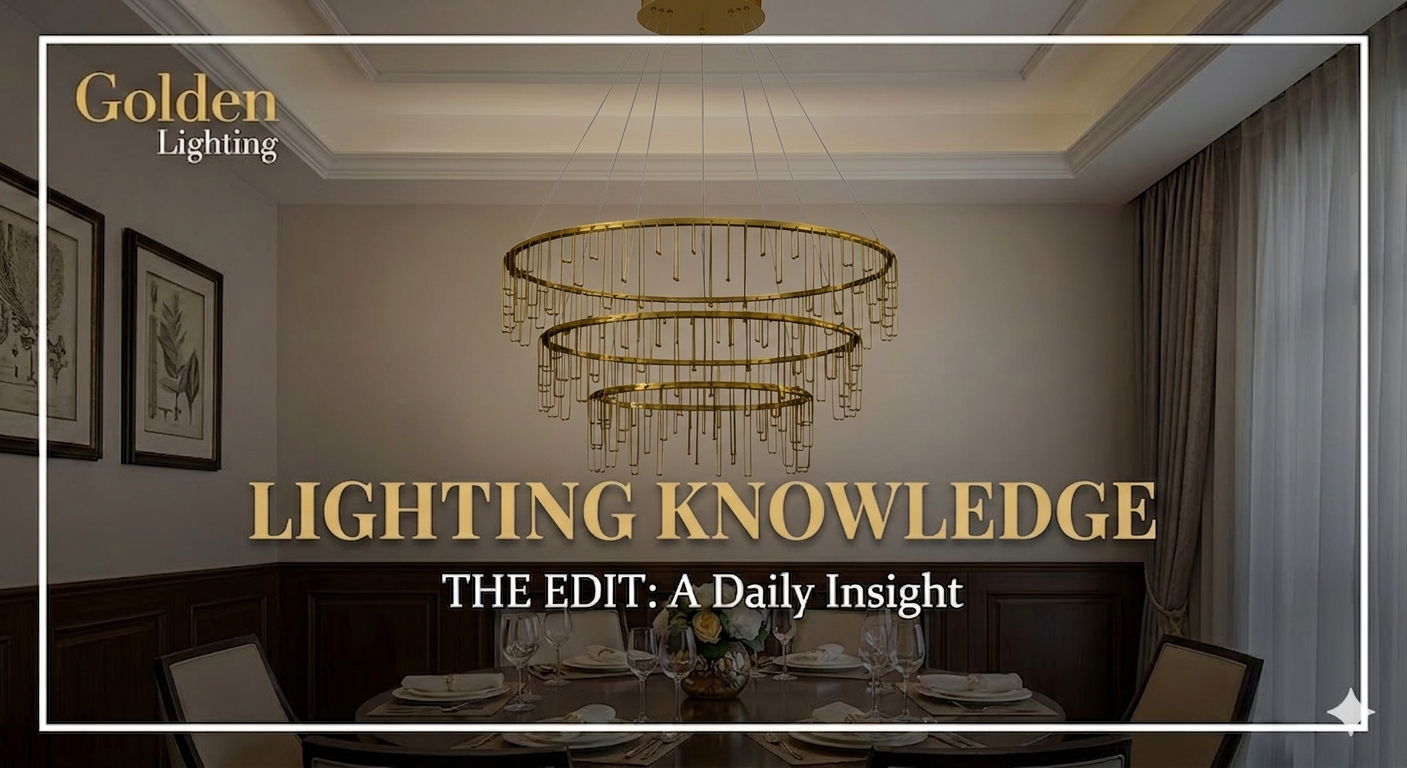
A short visual walkthrough can help clarify how these layers interact in a real room.
Accent light adds depth
Accent light is optional, but in a well-designed powder room it often makes the room feel finished. It might come from a picture light, a directional recessed source, or a fixture that throws light onto wallpaper or textured plaster.
Use accent light carefully in compact rooms. A little drama is enough. If every source is trying to be the star, the room starts to feel noisy.
Choosing Your Main Powder Room Fixture
Open the door to a small powder room and the main fixture makes its case immediately. In a compact space, there is no room for a light that looks sculptural in a product photo but throws glare into the mirror, crowds a narrow wall, or hangs too low for the ceiling height.

Wall sconces for the most flattering face light
Sconces still set the standard for flattering face lighting because they place light at the sides of the mirror, where it controls shadows better than a single source above. In powder rooms that are used by guests, that matters. People check their appearance quickly, and harsh top light is unforgiving.
Small rooms often make sconces difficult to execute well. The mirror may run close to a side wall. A faucet, backsplash, or decorative trim may leave too little breathing room. I have seen narrow powder rooms where the sconces technically fit, but the vanity wall felt pinched and the fixture looked like an afterthought. In those cases, forcing symmetry usually weakens the room.
Vanity bars for tight layouts
An over-mirror vanity fixture is often the cleanest answer in a small powder room. It preserves side-wall space, keeps the composition centered, and usually gives more flexibility when the mirror is wide but the wall is not.
The trade-off is glare control. Exposed bulbs or highly polished shades can bounce hard light off the mirror and nearby tile, which is especially noticeable in powder rooms with glossy wallpaper, stone, or lacquered paint. Fixtures with diffused light, shaded bulbs, or more controlled forward throw tend to perform better in these tight reflective envelopes.
Scale decides whether the fixture feels intentional. A narrow light over a large mirror can make the whole wall look undersized. A fixture that is too deep can project into the room more than expected, which matters in shallow layouts where every inch is visible from the doorway.
One factual example in this category is the Golden Lighting Ingalls 3-light Vanity in Matte Black. Its matte black finish and vintage milk glass shade make it a useful reference point for powder rooms that need a more directed light source and less visual reflectivity than open, high-glare fixtures.
Pendants and ceiling fixtures for style-first rooms
Pendants can bring real character to a powder room, especially in a jewel-box design where the lighting is part of the statement. But small rooms are less forgiving than primary baths. If the ceiling is low, a pendant can interrupt sightlines and make the room feel shorter. If the vanity wall is already carrying patterned wallpaper, an expressive mirror, and decorative hardware, adding hanging fixtures can push the composition past refined into busy.
Flush and semi-flush ceiling lights solve a different problem. They keep the ceiling plane tidy and support ambient brightness without asking for much visual space. In very small powder rooms, that restraint is often the smarter move, particularly when the mirror light is already doing the detailed work.
| Fixture type | Works best when | Main caution |
|---|---|---|
| Sconces | Side wall space is available | Hard to fit on narrow walls |
| Vanity bar | Mirror is centered and space is tight | Needs careful width and glare control |
| Pendants | Ceiling height and symmetry support them | Can overwhelm a compact room |
| Flush or semi-flush | Ambient fill is the priority | Won't replace good mirror lighting |
A powder room does not need the boldest fixture in the catalog. It needs the fixture that fits the wall, controls glare, and still gives the room presence.
Decoding Lumens Kelvin and CRI
A small powder room can have a beautiful fixture and still feel harsh the moment someone looks in the mirror. In compact spaces, light hits the face, mirror, wall finish, and ceiling almost at once. That makes bulb specs more visible here than in a larger bath.

Kelvin controls the mood on the skin
Kelvin tells you whether light reads warm or cool. In a powder room, that affects skin tone, makeup, and how materials such as brass, marble, wallpaper, and painted millwork look.
Industry guidance for vanity lighting recommends 2700K to 3000K for a warm, flattering result and cautions against pushing past 3500K in grooming areas, as explained in this bathroom vanity lighting guide.
In a small room, I usually treat 3000K as the upper edge unless the palette is intentionally crisp and modern. Cooler lamps can sharpen white surfaces, but they also make tight powder rooms feel harder and more reflective. Warm light is usually the safer choice when the room already has shiny tile, a large mirror, or limited distance between the fixture and the user.
CRI tells the truth about color
CRI, or color rendering index, measures how accurately a light source reveals color. For a powder room mirror, 90+ CRI is the target.
Low-CRI light flattens complex finishes and distorts skin, making the difference visible immediately in a room this small. That effect is more pronounced when guests are standing close to the mirror and the walls are carrying layered color or pattern.
For a clearer explanation of how this metric works, see Golden Lighting's guide to what color rendering index means in lighting.
Brightness should support the face, not blast the room
Brightness is where many small powder rooms go wrong. The goal is not maximum output. The goal is enough useful light on the face without glare bouncing off the mirror or washing out the room.
ANSI/IES RP-11-26 puts grooming-level illuminance at about 30 footcandles on the face at 3 feet, rising to 40 footcandles at 5 feet for older eyes. In practice, that means a well-aimed mirror light usually does more work than an oversized ceiling fixture. In a compact powder room, extra ambient light often makes the room feel flatter, not better lit.
A few practical bulb decisions help:
- Choose LED sources when possible. They run cooler, last longer, and reduce maintenance.
- Match bulb color temperature across the room so the ceiling fixture and mirror light read as one lighting plan.
- Use diffused glass or shaded bulbs when the lamp is visible in the mirror or sits close to eye level.
- Avoid chasing high lumen output in a single exposed fixture if the wall is narrow or the ceiling is low. Controlled light is usually more comfortable than raw brightness in a tight room.
Good powder room lighting helps the mirror read clearly, keeps glare under control, and lets the room's finishes look intentional at close range.
Rules for Perfect Placement and Sizing
A strong fixture can still fail if it lands in the wrong place. Placement is where function becomes visible. In small powder rooms, even a few inches in the wrong direction can create glare, chopped sightlines, or shadows across the face.

Start with the mirror, not the electrical box
The mirror should anchor the lighting plan. Too often, a remodel keeps an existing junction box and then forces the new mirror and fixture to work around it. That shortcut usually shows.
Industry guidance confirms that side-by-side sconces at eye level create the most even cross-illumination, and when only one fixture is possible, it should sit above the mirror with forward-projecting light, as explained in this guide to vanity light placement and mirror lighting.
That single principle solves many small-room decisions. If the room is too narrow for proper side spacing, stop fighting the architecture and choose a strong above-mirror solution.
Use sizing that respects the wall
A powder room fixture should feel proportional to the mirror first, and the room second. In compact spaces, oversizing can feel oppressive, but undersizing is the more common mistake.
A practical way to evaluate scale:
- For a centered mirror choose a vanity bar that visually relates to the mirror width, not just the electrical location.
- For a medicine cabinet mirror avoid deep fixtures that project into the user's line of sight.
- For low ceilings favor flush or semi-flush ambient fixtures that don't visually lower the room further.
A helpful reference for this installation question is Golden Lighting's guide to standard vanity light height.
Control glare before it starts
Glare usually comes from one of three issues. The fixture is mounted too high, the bulb is visible from normal standing height, or the mirror is reflecting the source directly.
That's why powder room lights with diffused lenses, opal glass, or shielded shades often outperform exposed-bulb styles in compact rooms. The room may be small, but the eye is working hard in it.
Pro Tip
Install a dimmer on every powder room lighting circuit that allows it. Bright task light is useful for cleaning and grooming. Lower light is better for evening guests and a calmer atmosphere. One fixture that can shift mood is more valuable than one fixture locked at full output.
Matching Light Fixtures to Your Decor
A small powder room makes style choices more visible. Guests stand close to the mirror, close to the walls, and often directly under the fixture, so every finish, shape, and shade detail carries more weight than it would in a larger bath.
Match the fixture to the room's visual weight
Start with the strongest surface in the room. If the wallpaper is bold, the stone is dramatic, or the mirror has a sculptural frame, keep the light fixture quieter and better controlled. In a compact room, too many statement elements compete fast. The result is visual noise, not character.
Calmer rooms allow the fixture to do more of the design work. A painted wall, simple vanity, and plain mirror can support a fixture with stronger geometry, richer metalwork, or more decorative glass.
Finish still matters, especially at close range. Warm brass usually reads best with wood vanities, creamy whites, and traditional details. Matte black adds definition in pale rooms and works well when the faucet, mirror frame, or hardware already introduces darker lines. Glass shades help soften rooms that have a lot of sharp edges or hard contrast.
Let style follow the room's constraints
In small powder rooms, decor matching is never just about taste. It is also about projection, glare, and ceiling height. A beautiful fixture that sticks too far off a narrow wall can feel clumsy. An exposed bulb may suit the style board but still create harsh reflections the moment someone looks in the mirror.
That tradeoff shows up often. Modern rooms usually benefit from tighter profiles and cleaner forms because they keep the wall feeling open. Farmhouse or transitional spaces can carry more shade detail and warmer finishes, but the fixture still needs enough shielding to stay comfortable in a close-up setting. Creative homeowners can also mix finishes and shapes across the home, especially when they repeat one element, such as metal tone, glass type, or curve profile, so the powder room feels connected rather than copied.
A simple way to decide
If two fixtures suit the decor, choose the one that resolves more of the room's pressure points:
- Does the shade or diffuser soften the light at close range
- Does the finish relate to the mirror, faucet, and hardware without forcing a perfect match
- Does the silhouette fit the wall shape and ceiling height
- Does the fixture still look intentional from the doorway
Good powder room lighting supports the room's style while handling the realities of a compact footprint. That balance is what makes a small space feel polished, comfortable, and memorable.
Ready to see options in person and compare finishes, scale, and light quality with confidence? Find a showroom near you.

Share:
Your Guide to the Perfect Glass Wall Sconce
Bathroom Vanity Light Gold: 2026 Trends & Buying Guide