


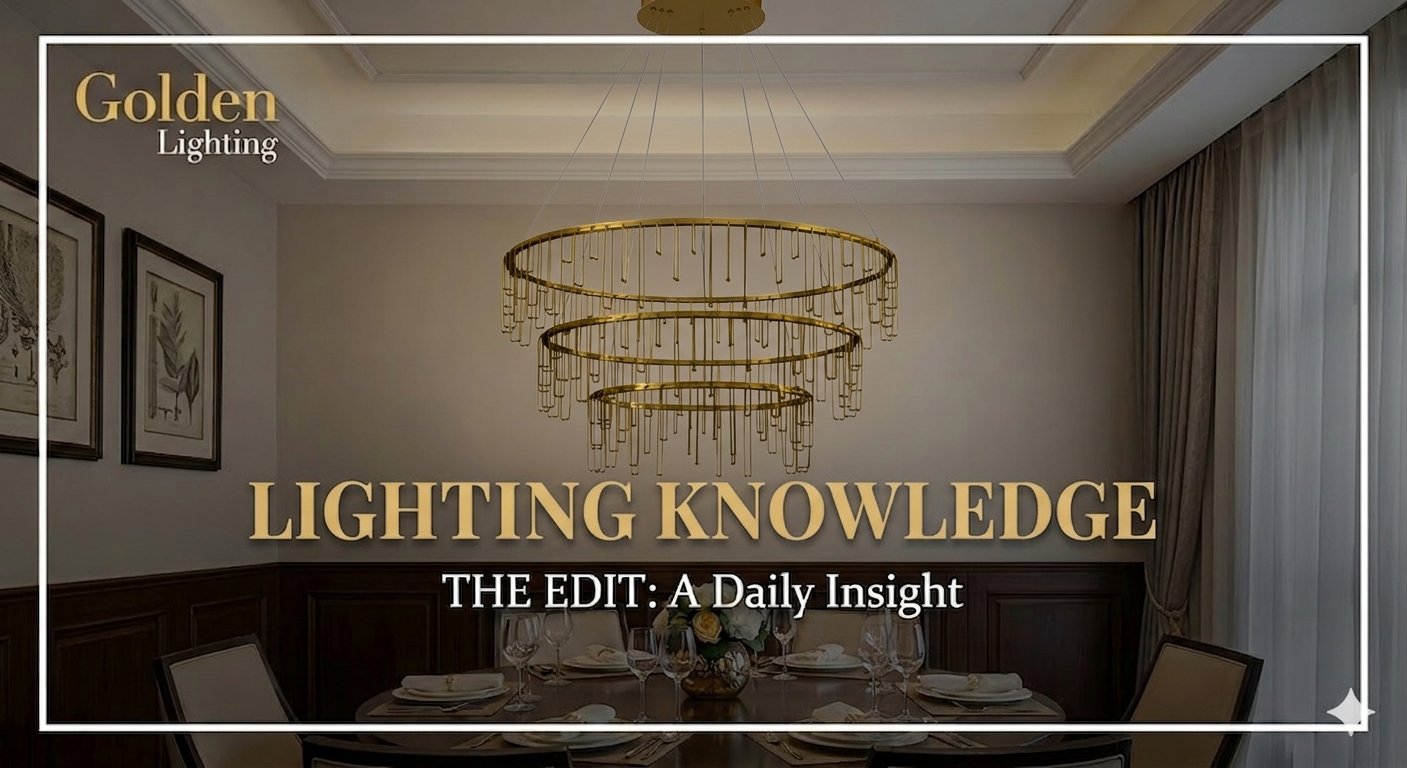
A room can have the right table, the right cabinetry, and a strong paint color, yet still feel flat the moment the lights turn on. More often than not, the problem isn't the décor. It's the quality of light in the room. Harsh glare over a kitchen island or a dining fixture that feels cold can undo a thoughtful design faster than most homeowners expect.
That's where a smoked glass pendant light earns its place. It doesn't just fill space overhead. It shapes the atmosphere, softens contrast, and gives a room visual depth that exposed bulbs or opaque metal shades often can't.
At Golden Lighting, the long view matters. A fixture should look current, but it also needs to hold its character after trends move on. Smoked glass has that staying power because it balances mood with restraint. It feels architectural, but still warm. It reads as distinctive, but not demanding.
The practical question is the right one to ask: Will a smoked glass pendant light be bright enough for the space? The answer is yes in some applications, no in others, and the difference comes down to how the fixture is specified and what role it's being asked to play. That's the decision framework that matters most.
An Introduction from Our COO
A common renovation story plays out the same way. The finishes are selected carefully. The island is generous. The stools are right. Then the overhead lighting goes in, and the room feels sharper than expected. The surfaces look good, but the atmosphere doesn't.
That gap is where pendant lighting proves its value. Pendant fixtures have roots that stretch back thousands of years, with suspended lighting tracing to ancient Egypt, Greece, and Rome, where early pendants were simple oil vessels with wicks. Over time, pendant lighting adapted from oil to electricity to LED-era design, and modern glass pendants continue that lineage by using translucent material to spread light more broadly than opaque shades, as noted in this history of pendant lighting.
Smoked glass stands out within that tradition because it solves two problems at once. It adds character during the day, and it reshapes the light after sunset. That combination is why it continues to appeal to homeowners, designers, and hospitality specifiers who want a room to feel composed rather than overlit.
A well-chosen pendant doesn't just illuminate the room. It tells the room how to feel.
There's also a reason smoked glass doesn't read like a passing novelty. It became especially associated with mid-century and 1970s design, and vintage examples from that era still circulate in today's market. That heritage gives the category credibility. It connects the fixture to a recognizable design language instead of a short-lived finish cycle.
For homeowners deciding between a clear statement piece and something softer, smoked glass often lands in the right middle ground. It's expressive, but disciplined. It invites warmth without turning the room theatrical.
The Allure and Heritage of Smoked Glass

A smoked glass pendant light is more than tinted glass. It's a specific lighting tool. The defining characteristic is a translucent, dark-tinted diffuser that moderates the light rather than blocking it, letting the bulb's silhouette remain visible while shifting the fixture away from high-contrast task lighting and toward softer ambient lighting. Heal's own smoked glass collection leans into that same quality from the decorative side — several of its designs are described as reading almost mirrored when off and translucent once lit, which is the aesthetic expression of the same light-moderating effect.
What the tint actually does
The easiest way to understand smoked glass is to think of it as sunglasses for the bulb. The fixture doesn't block the light completely. It moderates it.
That distinction matters in real rooms. A metal shade throws light in a more controlled direction. Smoked glass filters, softens, and lets the fixture contribute visually even when it's off. In a kitchen, that can reduce the starkness that sometimes comes from exposed bright sources over reflective countertops. In a bedroom, it can make overhead lighting feel less abrupt.
A few practical effects tend to show up consistently:
- Glare is reduced: The bulb feels less aggressive when viewed directly.
- The bulb remains part of the design: The silhouette still reads through the shade.
- The mood shifts warmer: Not because the glass creates heat or brightness, but because it lowers visual harshness.
Why it still feels current
Smoked glass carries a design memory that many homeowners recognize, even if they can't name it immediately. Its strongest association is with mid-century and 1970s interiors, which is part of why it feels both familiar and fresh. The look has enough history behind it to feel grounded.
That heritage also explains why smoked glass works across different settings. It can sit comfortably in a refined modern room, a softer transitional interior, or a more expressive vintage-inspired scheme. The material does the heavy lifting.
For readers exploring how distinctive glass can shape a room's personality, Golden Lighting's perspective on unique glass that sparks conversation is worth reviewing.
One useful comparison sits within Golden Lighting's own assortment. The Golden Lighting Dixon 1-light Pendant in Matte Black and Opal Glass uses opal glass rather than smoked glass, and that distinction is instructive. Its opal shade creates soft diffusion, includes a convertible semi-flush or pendant installation, adjusts from 16.375" to 52.375", and requires 1 E26 Medium base bulb with a maximum of 60W. That makes it a helpful point of reference for understanding how different glass types shape mood in different ways.
How to Choose the Right Smoked Glass Pendant
The biggest mistake with a smoked glass pendant light is expecting it to do every job in the room. It usually won't. And that's not a flaw. It's a specification issue.
Most homeowners ask the right question late in the process: Will the tint make it too dim? That concern is valid. A frequent gap in buyer guidance is that many product pages focus on style without clearly answering how smoked glass affects real-world light output and task usability over a kitchen island or dining table — this smoke-gray glass pendant listing is a fair example: strong on finish and form, silent on brightness or task-lighting guidance.

Start with the job, not the shade
A smoked glass pendant usually performs best as ambient lighting or as a decorative focal layer. It's often right over:
- Dining tables where softness matters more than sharp task visibility
- Kitchen islands when paired with recessed or undercabinet lighting
- Bedrooms where lower contrast supports a calmer atmosphere
- Entryways where the goal is arrival, not precision work
It's often the wrong standalone choice for spaces where the pendant must carry the full lighting load for chopping, reading plans, or detailed work.
Practical rule: If the room needs strong task light, smoked glass should support the lighting plan, not carry it alone.
Evaluate brightness honestly
The smartest approach is layered lighting. If the room already has downlights, undercabinet lighting, or wall lighting, a smoked glass pendant can bring mood without sacrificing function. If the pendant is the only source overhead, the tint deserves more scrutiny.
Use this quick decision framework:
| Space | Good fit for smoked glass | What to watch |
|---|---|---|
| Kitchen island | Yes, if other task lighting is present | Don't rely on it alone for prep work |
| Dining room | Yes | Usually a natural fit |
| Bedroom | Yes | Keep the glow soft and controlled |
| Workspace | Sometimes | Often needs a clearer or more direct fixture |
Whichever room it lands in, the same rule applies: let a smoked glass pendant set the mood, and let dedicated task lighting handle the actual work.
Choose the bulb with intention
Smoked glass changes how a bulb is perceived, so bulb selection matters more than many homeowners expect. The wrong bulb can make a beautiful pendant look underpowered or flat.
Focus on these practical checkpoints:
- Brightness: Select a bulb that supports the room's function, especially if the glass is darker.
- Color temperature: Warmer light usually suits smoked glass better than cooler light in living, dining, and bedroom settings.
- Light quality: A bulb that renders finishes and food pleasantly will always outperform one that feels sterile.
A smoky shade paired with a poor bulb often gets blamed unfairly. The fixture may be fine. The lamp choice may be the actual issue.
For shape inspiration when comparing silhouettes, Golden Lighting's guide to the tear drop pendant light is a helpful companion read.
Scale the fixture to the room
Size errors are common. A pendant that's too small disappears. One that's too large can feel heavy, especially with darker glass.
A better approach is visual balance:
- Over an island, use a fixture or grouping that feels proportional to the island length and ceiling height.
- Over a dining table, keep the pendant visually centered and sized to the table, not the room alone.
- In tighter areas, a smaller smoked glass globe can add mood without crowding sightlines.
When the fixture's role is clear and the bulb choice is intentional, smoked glass usually performs exactly as it should.
Styling Smoked Glass Pendants Room by Room

Placement changes everything. The same smoked glass pendant light can feel intentional, dramatic, or relaxed depending on the room and what surrounds it.
Glass pendants are especially effective for ambient illumination because glass disperses light in multiple directions, unlike metal shades that concentrate it more tightly toward the task below. That's why glass pendants suit dining rooms and living areas so well, while a kitchen work zone typically still wants a metal or more directional fixture handling the task lighting, per Edward Martin's comparison of glass and metal hanging lights. In kitchens, that means treating a smoked glass pendant as the mood layer over an island, not the only light source, which lines up with the layered-lighting approach above.
Kitchen islands and breakfast areas
In kitchens, smoked glass works best when it creates rhythm. A row of pendants over an island can make a hardworking surface feel more welcoming, especially when the cabinetry and counters already have crisp lines.
The key is restraint. If the kitchen has bold veining, strong hardware, and active backsplash patterns, choose a smoked glass form with a clean silhouette. Let the tint bring mood without adding visual noise.
For readers who want to compare forms and finishes in a broader retail context, it can help to browse pendant lighting at a few different retailers and study how glass profile, tint depth, and shade shape each change the feel of a room.
Dining rooms and conversation spaces
A dining room is where smoked glass often feels most natural. It lowers visual intensity and supports a more intimate tone. A single larger pendant or a composed cluster can help anchor the table without making the room feel formal in a stiff way.
This is also where finish pairing matters. Smoked glass with brass tends to read warmer and more layered. Smoked glass with black or darker metal reads sharper and more architectural.
A dining fixture should make people want to stay at the table longer. Smoked glass often succeeds because it softens the room without dulling it.
Bedrooms and entryways
Bedrooms benefit from overhead lighting that doesn't feel abrupt at night. A smoked glass pendant can create a more settled atmosphere, especially in rooms with natural materials, upholstered headboards, and muted wall colors.
In entryways, the effect is different. Here, smoked glass can make a first impression feel more intentional. It introduces contrast and depth before a guest even reaches the main living spaces.
Pro-Tip from the Golden Rule
Pro-Tip: When using smoked glass in a room with limited daylight, balance it with lighter surfaces nearby. Pale stone, warm white walls, or lighter wood finishes help the pendant feel moody, not heavy.
Different customer types often style this category differently:
- For homeowners: Classic globe or dome forms usually offer the longest visual lifespan.
- For creatives: YEP by Golden opens the door to more personalized mix-and-match thinking with shade and finish combinations.
- For professionals: Ziva by Golden works well when the room needs a more refined, showroom-forward presence.
Installation and Lasting Quality
A beautiful pendant has to earn its keep after installation. That means safe electrical planning, reliable components, and materials that still look composed after daily use.
Commercially listed smoked-glass pendants are commonly hardwired, often use standard replaceable lamp bases such as E27, and operate across AC 110–240 V, according to this smoke glass pendant specification reference. Safety listings vary by manufacturer and aren't always stated clearly on a product page, so confirm UL (or the applicable regional equivalent) listing directly with the retailer before purchase, especially for a hardwired fixture.
What matters before installation
Hardwired fixtures call for decisive planning. Ceiling height, junction box placement, and switch control should be resolved before the fixture arrives on site.
The practical checklist is straightforward:
- Confirm the mounting type: Most smoked glass pendants in this category are hardwired.
- Check the lamp base: A standard replaceable base makes future maintenance easier.
- Verify listing and code alignment: Confirm the fixture's safety listing directly with the manufacturer or retailer, and check it against local code where applicable.
- Plan for dimming: A dimmer reveals the full range of the fixture's character.
This is not optional. Hardwired installation should be handled by a qualified electrician.
For homeowners managing related fixture updates, Golden Lighting's article on how to install a vanity light fixture gives a useful look at the level of care electrical fixture work requires.
How to keep smoked glass looking sharp
Smoked glass rewards simple maintenance. It also shows fingerprints, dust, and residue more readily than many people expect, especially in kitchens.
Use a soft cloth. Clean gently. Dry thoroughly so the glass doesn't streak.
A few habits help preserve the finish:
- Turn power off and let the bulb cool before cleaning.
- Avoid abrasive pads or harsh cleaners that can mark the glass or surrounding finish.
- Wipe the canopy and hardware too so the fixture ages evenly as a whole composition.
The best engineered fixture still needs thoughtful care. Maintenance protects the finish, but it also protects the design intent.
Your North Star for Inspired Lighting
A smoked glass pendant light succeeds when it's chosen for the right reason. It isn't the answer to every lighting problem, and that's exactly why it remains such a valuable design choice. It brings atmosphere, visual depth, and a more polished glow to spaces that feel too exposed under harsher fixtures.

The strongest interiors don't chase novelty. They choose materials and forms that continue to feel right as the home evolves. Smoked glass has that quality. It connects to a long pendant-lighting heritage, carries recognizable design character, and works across modern, transitional, and more expressive interiors when specified with care.
The practical takeaway is simple:
- Choose it for mood and layered light
- Be honest about task-light needs
- Prioritize safe installation and solid engineering
- Let the fixture support the room's architecture, not compete with it
That's the approach Golden Lighting believes in. Timeless design matters. Quality engineering matters. The right light should still feel right years from now.
Ready for a next step? Shop pendant lighting at Golden Lighting, explore the latest catalog inspiration, or find a showroom near you to see the finish, scale, and light quality in person.

Share:
Hanging Light with Chain: Ultimate Guide 2026
A Mirror with LED Lights: An Expert's Buying Guide