


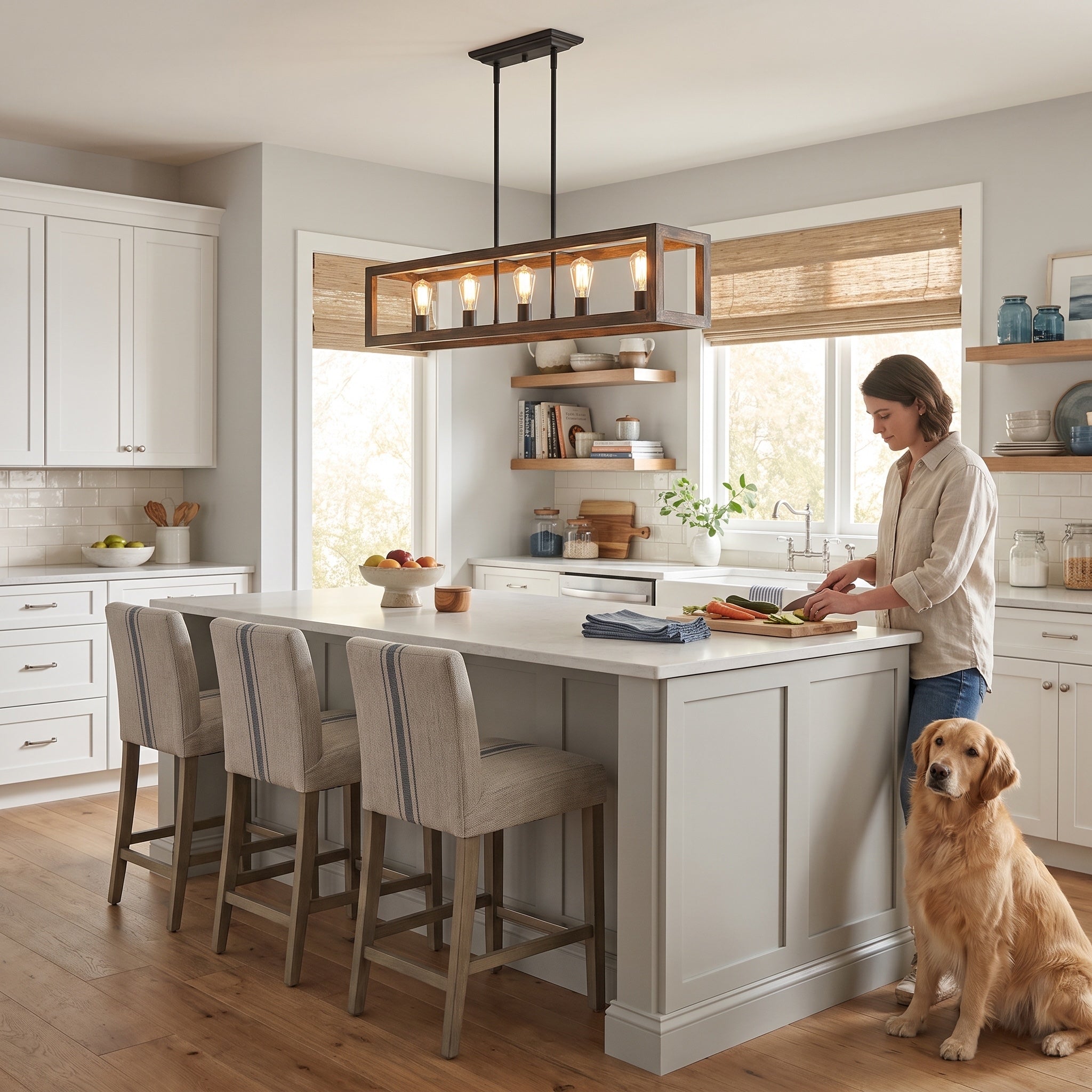
Does your kitchen island feel like a dark, undefined space in the heart of your home? You're not alone. That empty area above your counter isn't a problem to be solved; it's a blank canvas waiting for the perfect touch. This is where we believe the right kitchen pendant lighting over island fixtures can completely transform the look, feel, and function of your kitchen.

Your Guide to a Brighter, More Beautiful Kitchen Island

At Golden Lighting, we've seen it time and again: a few well-chosen pendants can single-handedly elevate a kitchen. They layer focused task lighting for chopping and prepping with a warm, inviting glow for conversation. It’s that final touch that makes a room feel truly complete. The impact of lighting choices in whole house remodels is immense, and the island is often center stage.

Think of this guide as your personal roadmap. We’ll walk you through every step, from mastering the essential rules of measurement to choosing styles that perfectly express your home’s personality. Our goal is to give you the expert confidence to light your kitchen beautifully.

What This Guide Covers

We built this resource to be your go-to guide, whether you’re a homeowner planning a weekend project or a designer sourcing for a client. We’ll dive into:

  • How to Choose the Right Size, Spacing, and Height: Simple, can't-miss formulas for getting the measurements of your pendants just right.
  • How to Match Pendants to Your Kitchen's Style: A guide to selecting fixtures that complement your kitchen’s architecture, from Modern Farmhouse to sleek contemporary.
  • How to Create the Perfect Mood with Light: Making sense of lumens and color temperature so you can get the ideal light for any occasion.

Of course, illuminating your island is just one piece of the puzzle. To see how these fixtures play a role in a complete design, explore our approach to creating a layered lighting plan.

From the COO: The Power of Purposeful Lighting I've always seen lighting not as a finishing touch, but as a fundamental architectural element. A well-placed pendant doesn’t just light up a countertop—it defines the entire social dynamic of the kitchen. In my years in this business, I've learned it's a true investment in the quality of your home and, more importantly, in your daily life.

How to Choose the Right Size and Spacing for Your Pendants

You’ve found a pendant style you absolutely love—fantastic! But before you click “add to cart,” let’s talk about the single most important step: getting the scale and placement right. In my experience, this is where the most common—and most avoidable—mistakes happen.

Think of it less like math and more like the geometry of a well-balanced room. These simple guidelines are the key to unlocking that professional, harmonious look everyone wants.

How to Calculate Your Ideal Pendant Size

The first secret is proportion. You want your pendants to complement your island, not overpower it or get lost in the space. Choosing fixtures that are too small is a classic misstep that can make an otherwise beautiful kitchen feel unfinished.

Here’s a simple rule of thumb to find the right diameter. Start with the width of your island countertop.

(Island Width in inches) - 12 inches = Your Maximum Pendant Diameter

So, if your island is 36 inches wide, a single large pendant should have a maximum diameter of 24 inches. This ensures you have at least 6 inches of visual "breathing room" on either side, which keeps the look clean and uncluttered. If you're using multiple smaller pendants, this number still serves as a great reference for their overall scale.

Of course, size is also about purpose. Are you looking for focused task lighting for meal prep, a soft ambient glow, or a bold decorative statement? Your primary goal will help narrow down the options significantly.

A flowchart guiding the selection of a pendant lighting based on primary function, desired atmosphere, and design focus.

As you can see, knowing whether you need function or flair makes the final choice much easier and more confident.

How to Find the Sweet Spot for Hanging Height

The height of your pendants is critical. If they’re too high, you’ll lose that effective task lighting on your counter. Too low, and they become a head-level obstacle that blocks sightlines across the kitchen.

In my experience, the magic number is almost always the same.

The bottom of your fixtures should hang between 30 and 36 inches from the top of your island countertop.

This range is the sweet spot. It illuminates your workspace without creating a visual barrier, so you can still chat with family and friends. If you have ceilings higher than 8 feet, you can lean toward the 36-inch mark to keep the room feeling balanced and open.

How to Master the Art of Spacing

When you’re hanging more than one pendant, the goal is to create a pleasing rhythm and even light distribution. It’s all about making the arrangement look intentional and perfectly centered over your island.

Here's a quick reference guide to keep these rules handy.

Pendant Sizing and Placement Quick Reference Guide

Measurement Rule Guideline Pro-Tip
Pendant Diameter (Island Width) - 12" = Max Diameter This ensures at least 6" of clear space on each side of the fixture.
Hanging Height 30" to 36" above countertop Aim for the higher end of the range for ceilings over 8 feet tall.
Spacing: Two Pendants Measure 12" to 18" out from the island's center point for each fixture. This places each light about one-third of the way in from each end.
Spacing: Three Pendants Hang one pendant at the center, then space the others 24" to 30" apart (center to center). Always leave at least 6" from the island edge to the edge of the outer pendants.

These guidelines will give you a fantastic result every time.

Pro-Tip: Visualize Before You Install

Before you call the electrician, try this. Grab a few balloons and some painter's tape. Inflate the balloons to the approximate diameter of the pendants you're considering and hang them from the ceiling at your target height.

This simple designer's trick lets you live with the scale and spacing for a day or two. You can walk around them, see them from the next room, and get a real feel for their presence. It gives you total confidence in your measurements before you commit.

These foundational rules are a great starting point for any kitchen island project. For an even deeper dive and other room scenarios, check out our complete guide on how to size and place your light fixture.

How Many Pendants Should You Hang Over Your Island?

Deciding on the number of pendants for your kitchen island is more of an art than a science. It’s a choice that truly defines the room's entire feel. From our design experience, the goal isn't just to fill the space—it's about creating a sense of balance, rhythm, and purpose. Get it right, and your island transforms from a mere work surface into a deliberate design statement.

Yep by Golden Lighting Hines 1-light 7in Pendant in Pewter and Opal Glass - Default Title - Golden Lighting

The Case for a Single Statement Pendant

For a smaller island (under 5 feet long) or if you're chasing a bold, minimalist look, a single oversized pendant can be incredibly powerful. This approach creates a dramatic focal point, confidently drawing the eye and anchoring the entire space.

  • Best For: Small to medium islands, round islands, or kitchens with a strong minimalist or artistic style.
  • What to Choose: Think big. Look for a large-scale drum, a beautiful globe, or an intricate sculptural fixture that can command attention all on its own. A single, impactful fixture delivers both ample light and a strong design anchor.

The Classic Appeal of Two Pendants

A pair of pendants brings a wonderful sense of symmetry and balance to a room. It's a timeless choice that works beautifully for medium-sized islands, typically those between 6 and 7 feet long.

  • Best For: Medium islands where one pendant feels a bit lost but three would feel crowded.
  • What to Choose: Select two identical pendants that are substantial enough to hold their own. This setup is perfect for showcasing elegant fixtures that simply look better in pairs.

The Popularity of Three Pendants

When you have a longer island—8 feet or more—a trio of pendants is almost always the perfect solution. This layout gives you the most even light distribution for tasks all the way across the surface. There’s a reason this is the most popular and versatile approach; it delivers on both superior function and a pleasing visual cadence.

Kitchens are the heart of the home, and the market reflects that. The kitchen lighting sector is projected to hit an incredible USD 26.39 billion by 2030, with kitchen pendant lighting over island fixtures being the fastest-growing segment. This boom is fueled by open-concept living, where over 60% of new renovations now feature multiple pendants to blend task and ambient light. See the latest kitchen lighting market trends.

How to Match Pendants to Your Kitchen's Aesthetic

Choosing the right kitchen pendant lighting over island fixtures is the defining touch that brings your whole look together. Over the years, we’ve seen time and again that the most stunning kitchens are the ones where the lighting feels like a natural part of the room's story, not just an afterthought.

Three stylish kitchen pendant lights: modern metal, mid-century, and industrial, hanging above an island.

Defining Your Kitchen's Style

First things first: get a real feel for your kitchen's personality. Is it giving off warm and rustic vibes, or is it cool, sleek, and minimal? Your pendants should speak the same language.

  • Modern Farmhouse: This is all about blending rustic comfort with clean, modern lines. Look for simple shapes in finishes like matte black, oil-rubbed bronze, or a soft aged brass.
  • Mid-Century Modern: Think organic forms, clean geometry, and an artful mix of materials. Globe pendants are iconic here, as are sculptural fixtures that pair rich wood accents with metals like satin brass.
  • Industrial: This style pulls its inspiration straight from old factories and warehouses. It’s all about raw, functional beauty. Look for pendants with exposed bulbs, unfinished metals, and wire cages.
  • Transitional: A beautiful middle ground between traditional elegance and contemporary calm. Go for classic shapes—like fabric drum shades or glass lanterns—but update them with fresh finishes like polished nickel or soft gold.

The Art of Coordinating Your Finishes

Once you know your style, it’s time to coordinate. Your chosen finish, whether it's a modern brass kitchen lighting finish, a bold matte black, or a sleek polished nickel, should have a conversation with the other metals in the room—like your cabinet hardware and faucet.

They don't need to be a perfect match—in fact, sometimes it's better if they aren't! But they do need to complement each other. For instance, a warm aged brass pendant can look absolutely brilliant paired with black cabinet pulls and a matte black faucet.

Pro-Tip: The Rule of Three for Finishes In our experience, the most balanced and sophisticated kitchens stick to two, or at most, three metal finishes. Choose a dominant metal (perhaps for your cabinet hardware), a secondary accent (your pendants), and a possible third for a smaller touch, like the frame on your barstools. This simple rule keeps the space from feeling cluttered and ensures a high-end, cohesive result.

It’s no surprise that homeowners and designers are zeroing in on these details. Pendant lighting is on track to grow at a rate of 8.29% through 2031. This boom is all about design-forward projects where standout fixtures can truly become the star of the show. You can read more about the trends shaping the kitchen lighting market.

How We Design for Every Need

We know every project is different, and so is every homeowner. That's why we've designed our collections to fit distinct needs.

For the Professional: When you’re sourcing for a luxury project where every detail matters, our Ziva by Golden collection is your answer. These are statement pieces, crafted with showroom-quality materials and sophisticated engineering. A fixture from the Ziva line isn't just a light; it's designed to be the undeniable focal point of a high-end kitchen. This is perfect for a piece from our refined Ziva collection to create a truly memorable moment.

For the Creative: If you're all about putting your own unique spin on your home, our YEP by Golden line gives you total creative control. We built this collection around the "Your Everything Pendant" concept, letting you step into the designer's shoes. You can mix and match from a huge selection of shades, finishes, and glass styles to build a fixture that's 100% you. It’s the best way to guarantee your island lighting is a true one-of-a-kind creation.

How to Create the Perfect Mood with Brightness and Color

A gorgeous pendant is one thing, but the light it casts is what truly makes your kitchen feel like home. The look of a fixture is only half the story; at Golden Lighting, we believe performance is just as important as aesthetics.

This is where we get into the nuts and bolts of your light bulbs. Let’s talk about the two make-or-break factors: brightness and color.

Understanding Lumens for Perfect Brightness

Let's start with lumens. Think of lumens as a true measure of a bulb's brightness—a much more reliable metric than watts. Your kitchen island is a workspace, so you need clear, effective light.

For task-heavy areas, we always recommend aiming for 700 to 800 lumens per pendant. This gives you plenty of crisp, clear light for chopping vegetables or reading a recipe.

But you won't always need your island lit for surgery. That’s where creating the right mood comes in.

Mastering Ambiance with Color Temperature

Next up is Kelvin (K), which is the measure of a light’s color temperature. This is what sets the entire vibe of your kitchen.

  • 2700K to 3000K: This is your "warm white." It gives off a soft, inviting glow perfect for creating a relaxed atmosphere.
  • 3500K to 4000K: This range is a "cool white" or "neutral white." The light is brighter and crisper, an amazing choice for a clean, modern kitchen.
  • 5000K and above: We call this "daylight." It’s a very cool, almost blue-toned light that we find often feels too harsh for a home kitchen.

For the best of both worlds, we suggest bulbs in the 3000K to 3500K range. It’s a beautifully clean light that’s perfect for tasks but still feels warm and inviting when you dim it down.

Why Dimmers are a Non-Negotiable

If you only take one piece of advice from this guide, let it be this: put your island pendants on a dimmer switch. We consider it a non-negotiable feature for any modern kitchen.

A dimmer gives you the power to completely transform your kitchen’s mood in an instant. You can crank up the brightness for meal prep and then dial it way down for a more intimate feel.

The Clear Advantages of LED Technology

The shift to LED has changed lighting for the better. LEDs are 75% more efficient than old incandescent bulbs—a huge deal, especially since post-2020 remodels saw a 30% spike in pendant use over islands. You can find out more about the growth of the kitchen lighting market in recent years.

Beyond the incredible energy savings, today's LEDs offer fantastic color rendering and last for years. To get an even better handle on what to look for, check out our complete bulb selection tips to make the perfect choice for your new fixtures.

What to Know Before Installing Your Pendants

The final step in bringing your vision to life is a perfect, professional installation. While hardwired fixtures like kitchen pendant lighting over island always call for a licensed electrician, knowing the process is your secret weapon for a smooth project.

In my years in this business, I've seen that the best results come from a great partnership between you and your pro. When you know what to expect, you can head off surprises and make sure the finished look is exactly what you dreamed of.

Planning Your Electrical Rough-In

If you're in the middle of a renovation, you’re in the best possible position. The electrical rough-in—that phase before the drywall goes up—is the absolute best time to plan for your pendants. This is your chance to have an electrician run wiring and place junction boxes precisely where they need to be.

Getting this right from the start saves a world of hassle and cost compared to moving electrical work after the fact. To get a handle on the budget and scope, it’s helpful to look at what similar work entails, like this guide on the cost of installing recessed lighting, which breaks down the key factors.

Key Pre-Installation Checks

Even if your home isn't a construction zone, a few quick checks before your electrician arrives can make all the difference.

  • Junction Box Support: Is your existing junction box strong enough for your new light? Heavier fixtures might need a fan-rated box.
  • Sloped Ceilings: If your ceiling is vaulted or angled, you’ll need a pendant with a canopy and hardware specifically designed to hang straight.
  • Dimmer Compatibility: This one is crucial. You need to make sure the dimmer switch is a perfect match for both the fixture and the specific LED bulbs you chose. Mismatched components are the number one cause of flickering.

Pro-Tip A Checklist for Your Electrician

Trust me, a quick chat before the work begins can save hours of headaches later. Walk your electrician through your plan and run through these questions to get everyone on the same page.

  • Have you confirmed the junction boxes are secure and properly rated for the fixture's weight?
  • Can we double-check our final hanging height—that 30 to 36 inches above the countertop—before you make the final cuts?
  • Will the placement be perfectly centered according to our spacing plan?
  • Is the dimmer switch you're installing fully compatible with these specific LED bulbs?

This simple conversation ensures a seamless journey from unboxing your beautiful new lights to that satisfying moment you flip the switch.

Your Kitchen Lighting Questions, Answered

Of all the design decisions that go into a kitchen, we find that pendant lighting over the island sparks the most questions. It’s understandable—these fixtures are a focal point, and getting the details just right is the key to a truly finished look.

Let's walk through some of the most common questions we've heard over the years, so you can move forward with total confidence.

Can Pendants Be the Only Light Source Over an Island?

It’s a tempting idea, but pendants work best as part of a team. While they’re fantastic for creating ambiance and providing direct task lighting, relying on them alone can cast shadows across your workspace.

The professional solution is always a layered lighting plan. We recommend pairing your statement pendants with recessed can lights. This combination ensures your entire island is bathed in beautiful, functional light, leaving no corner in the dark.

Should My Pendants Match My Chandelier?

They definitely don't need to be twins, but they should feel like they're from the same family. Think of them as cousins who share a similar style, not identical siblings from the same set.

The secret is to create a visual connection. Make sure they share at least one common design element, such as:

  • Finish: A modern brass pendant feels right at home with a chandelier that also incorporates brass details.
  • Shape: Pair a globe pendant with a chandelier that features other soft, rounded lines to create a sense of harmony.
  • Material: A fixture with a fabric shade can beautifully echo a fabric shade on another light in the kitchen or an adjacent dining space.

This simple strategy creates a cohesive, intentionally designed look that feels thoughtful, not just matched.

What if I Have a Very Low Ceiling?

A low ceiling doesn’t mean you have to skip island lighting! While long, dangling pendants might not be the right fit, you have some brilliant alternatives. Semi-flush mount fixtures or even a sleek linear chandelier can deliver that stylish focal point without crowding your headspace.

The non-negotiable rule is maintaining that crucial 30 to 36-inch clearance above the countertop. Any fixture that hits this mark while still feeling comfortably scaled for the room is a fantastic choice.

Pro-Tip: A Decisive Answer on "Trendy" vs. Timeless

Homeowners often ask me if they should worry about a particular style going "out of date." Here's my honest take: in my experience, the best approach is to choose a design that is authentic to your home’s architecture and, most importantly, to you. A fixture that you genuinely love, that is scaled correctly for the space, and that coordinates with your finishes will always look right. Don't chase a fleeting trend; invest in quality and a style that makes you happy every time you walk into the room. That’s the real secret to a look that lasts.


At Golden Lighting, we believe the perfect light is the one that makes your house feel more like home. We’re here to be your North Star, guiding you to fixtures that tell your story.

Ready to find your perfect light? Shop the Pendant Collection and start your transformation.